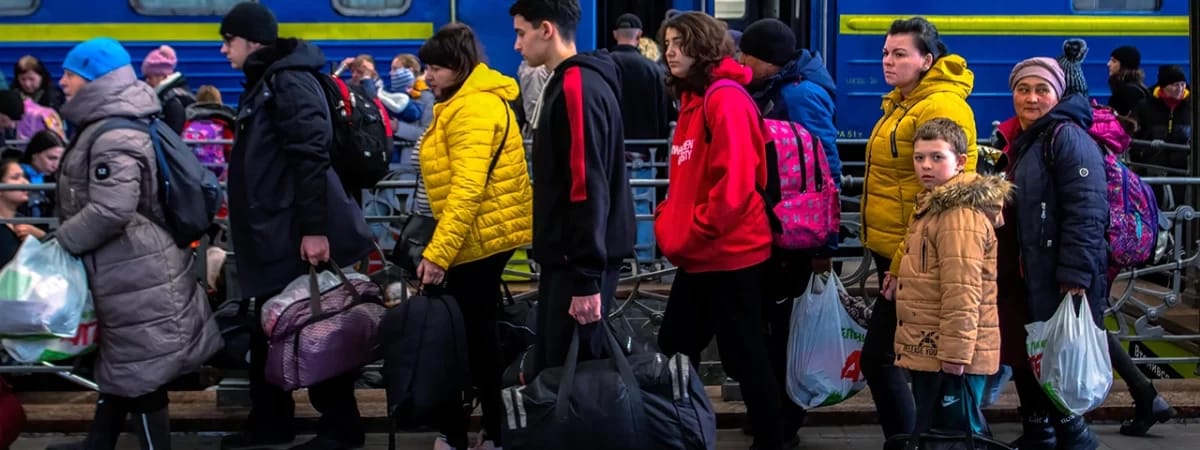
Ukrainians are one of the largest diasporas in Spain: according to official data, more than 313 thousand Ukrainian citizens with valid documents live in the country. Most live in Madrid, Catalonia and Valencia. This article covers where they settle, which statuses give the right to live and work, what life costs and what to do in the first weeks after moving.
Can you move to Spain with a Ukrainian passport?
Yes, and there are two routes: temporary protection for those who left because of the war, and a residence permit on general grounds — remote work, a residence permit without the right to work, employment, study, a startup visa, family reunification. All the grounds and their conditions are in our overview of Spanish residence permits.
- No visa is needed for short trips. Ukraine is on the list of countries whose citizens enter the Schengen Area visa-free — Annex II to Regulation (EU) 2018/1806. To move for more than 90 days you need a national visa or a residence authorisation.
- Temporary protection. Temporary protection under the EU Council decision is valid until 4 March 2027. On 15 July 2026 EU countries agreed to extend it until 4 March 2028. At the same time they decided that new applicants would be granted protection only if they have met their military obligations to Ukraine — for example, shown by a passport with a Ukrainian border guard exit stamp. This condition does not apply to those who already have protection. The rights it gives are covered below, in the section “Temporary protection: the main status for refugees”.
- Remote workers can apply from inside Spain. If you are in the country legally — for example, after visa-free entry — the teleworker authorisation is requested on the spot. From Ukraine only a visa can be applied for, through a consulate. This is how the Unidad de Grandes Empresas describes it.
- A criminal record certificate — from the country where you lived for the last two years. All countries of residence in the five years before applying are checked. Ukraine has been party to the Hague Convention since 2003, so Ukrainian documents are certified with an apostille.
- Citizenship — after ten years of residence. Ukraine is not on the list of countries whose nationals keep their original citizenship when naturalising in Spain, so when obtaining a Spanish passport you declare that you renounce Ukrainian citizenship — Articles 22 and 23 of the Civil Code. What happens to Ukrainian citizenship in that case is covered in the article on dual citizenship in Spain for citizens of Belarus, Kazakhstan and Ukraine.
If you work remotely for a foreign client, start with our guide to the digital nomad residence permit.
History and statistics of the Ukrainian diaspora
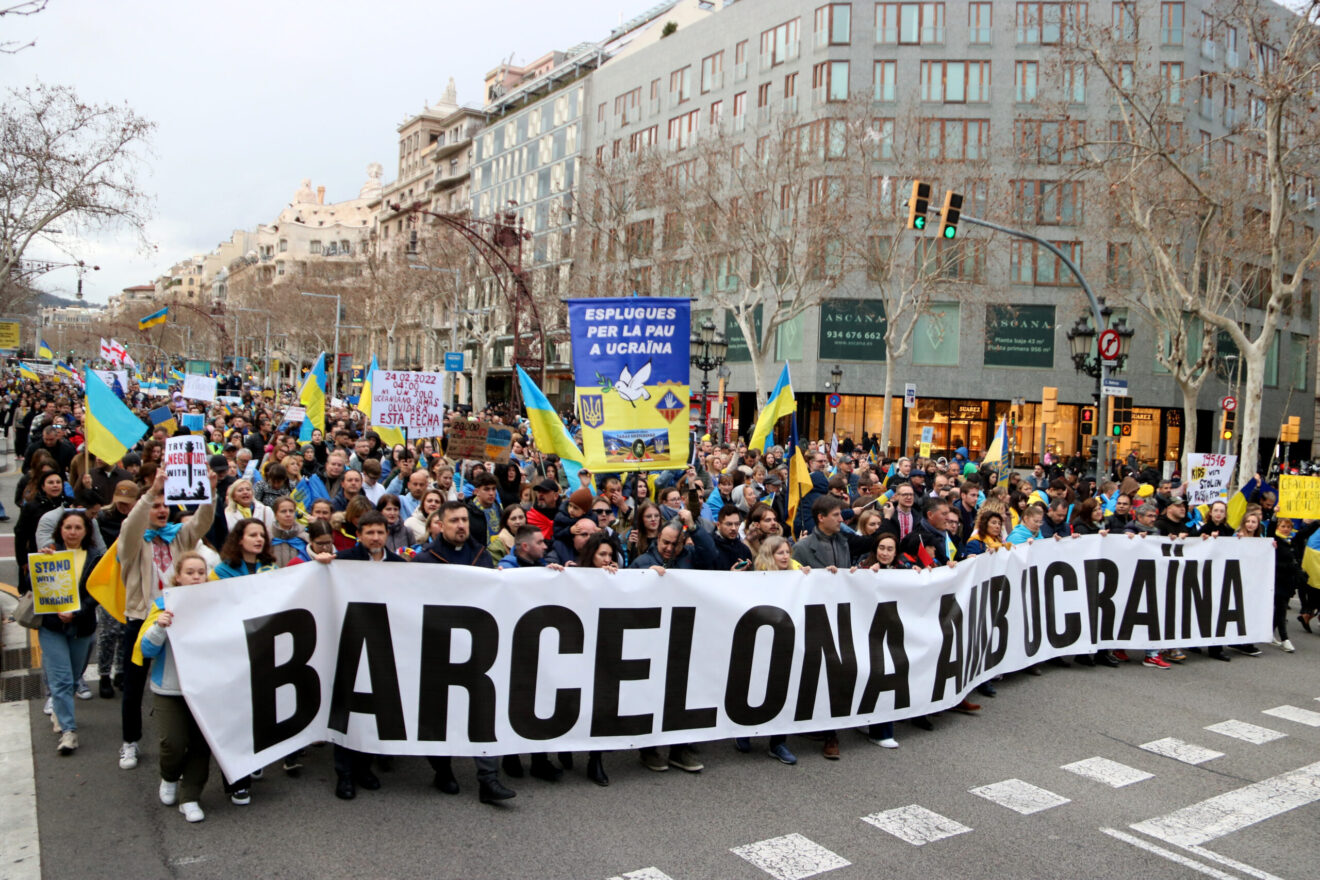
After February 2022 Spain became one of the main destinations in the European Union for Ukrainian citizens. As of 30 June 2024, 301,140 Ukrainians with valid residence documents were officially registered here, and by the start of 2025 more than 313 thousand. Growth compared with 2021 was 223%.
It is one of the largest diasporas in the country: roughly a third of all Ukrainian refugees in Southern Europe live in Spain.
Where Ukrainians live in Spain
Ukrainians settle in large cities and economically developed autonomous communities — where it is easier to find work and where communities have already formed.
Top 5 regions by number of Ukrainians:
Madrid — 23,352 people. The capital and centre of the diaspora: the most vacancies and direct access to public services. The main CREADE refugee reception centres, Ukrainian community organisations, language courses and integration programmes operate here.
Catalonia — 23,619 Ukrainians, 13,191 of them in Barcelona. A developed economy, jobs in tourism, IT and services. Bear in mind the language factor: Catalan is used in schools and public institutions.
Valencia — 21,780 Ukrainians, 6,166 of them in the city itself. The coast, a mild climate and a noticeably lower cost of living than Madrid and Barcelona — with comparable infrastructure.
Alicante — the province is home to 11,506 Ukrainian citizens. Costa Blanca towns such as Torrevieja, Benidorm and Alicante itself attract people with their mild climate and developed tourism industry. In some municipalities the Ukrainian diaspora has become the largest.
Andalusia — 17,414 people, including 11,503 in the province of Málaga. The southern region offers opportunities in agriculture and tourism.
Sizeable communities have also formed in other regions of Spain: Murcia (agricultural work) and Galicia (farming and fishing).
If you are choosing a region, it is easier to compare by the numbers: rents, average incomes, diaspora size and climate for all 52 provinces are collected on the relocation map.

Temporary protection: the main status for refugees
Since the start of the war, the Spanish government has actively implemented the European Union’s Temporary Protection Directive — a mechanism used for the first time since it was adopted in 2001. The Spanish authorities have created special infrastructure for receiving and integrating Ukrainian refugees.
What does temporary protection status give you in Spain?
Once they have temporary protection in Spain, Ukrainian citizens have access to the following rights:
- Legal residence in Spain until 4 March 2027 (extended by EU decision)
- Immediate right to work in Spain (from age 16)
- Free healthcare in Spain at public clinics
- Free education for children throughout compulsory schooling (ages 6–16)
- Access to social services throughout Spain
- The ability to open a bank account
- The right to rent housing in Spain
Who can get temporary protection?
Protection in Spain can be granted to the following categories of people:
- Ukrainian citizens who were in Ukraine before 24.02.2022
- Their family members (of any nationality)
- Stateless persons with protection in Ukraine
Documents required in Spain:
- Biometric international passport
- Children’s birth certificates (if applicable)
- Proof of address (empadronamiento — municipal registration)
- Photos for documents in Spain (32×26 mm)
- Receipt for payment of the fee (~€17)
Where to apply?
You can apply for temporary protection in Spain at the special Reception, Assistance and Referral Centres (CREADE):
- Madrid — the centre in Pozuelo de Alarcón (+34 91 399 00 09)
- Málaga — the centre in Andalusia
The centres in Barcelona and Alicante have been closed since 2024 — applications are now taken at police stations of the Spanish National Police.
How to apply through the Spanish police:
- Book an appointment through the online system
- Prepare all the required documents
- Arrive at the appointed time
- Submit the application to the Spanish police
- Wait for the decision (usually a few days or weeks)
Key documents: NIE and TIE
After approval the applicant receives an NIE (Número de Identidad de Extranjero) — a lifelong foreigner identification number needed for all transactions in Spain: work, opening a bank account, paying taxes, buying property in Spain.
TIE (Tarjeta de Identidad de Extranjero) — a plastic resident card with a photo confirming the right to live in Spain. It is issued within 30 days of receiving the NIE. The card is valid until March 2026 for all Ukrainians with temporary protection — what changes next and how to switch to another status is covered in the article on modifying temporary protection.
Empadronamiento — mandatory registration of your address at the town hall, needed to get a health card and enrol children in school. This document confirms that you actually live in Spain.
Other ways to legalise your stay
Besides temporary protection, Ukrainians can obtain a residence permit in Spain on the following grounds:
Digital nomad visa
Since 2023 Spain has had a digital nomad visa — an option for IT specialists, freelancers and anyone who works online for foreign clients.
Conditions for getting the visa in Spain:
- Remote work for a foreign (non-Spanish) company
- Minimum income: €2,849 a month (200% of the minimum interprofessional wage under BOE 126/2026)
- Work history: at least 3 months with the current employer
- The company must have existed for more than 1 year
Required documents:
- Employment contract or client contracts (for freelancers)
- Bank statement
- Criminal record certificate
- Health insurance
- Educational diplomas (desirable)
The advantages of this visa are clear:
- An initial residence permit in Spain for 1 year (visa) or up to 3 years (if you apply from within the country)
- Possibility of renewal for another 2 years
- The right to work for Spanish companies (up to 20% of income)
- Moving with your family
- Free movement within Schengen
Taxation: For the first 4 years a special tax regime applies with a flat rate of 24% on income up to €600,000 (instead of the progressive rate of up to 45%). This makes life in Spain especially attractive for digital nomads.
Applying: From abroad — through the Spanish consulate in your country of residence. Processing time: 1–3 months.
Startup visa
The startup visa is designed for entrepreneurs with an innovative project: the application is assessed by the state agency ENISA, and no large investment is required at the start.
Who it suits:
- Founders of tech startups
- Entrepreneurs with innovative projects
- Startup team members (up to 5 people)
Project requirements:
- Innovation and technology
- Potential to scale
- A positive impact on the country’s economy
- Approval from ENISA (the National Innovation Company)
Financial requirements:
- €31,752 for the main applicant
- €11,907 for a spouse
- €3,969 for each child
The money must be in an account and confirmed by a statement — this is a mandatory condition for obtaining a residence permit in Spain.
The process:
- Prepare a business plan in Spanish
- Submit documents to ENISA for project assessment
- Receive a favourable report (2–4 months)
- Apply for the visa at the UGE (Large Companies Unit)
- Receive a residence permit in Spain for 3 years
Advantages:
- A residence permit in Spain for 3 years straight away
- The right to work and run a business in Spain
- Family reunification
- The option to apply for permanent residence after 5 years
- No minimum investment required
Important: Since 2024 the application has been split into two parts: the business plan to ENISA + documents to the UGE. The process of registering a business in Spain has become more structured.
Residence permit for highly skilled professionals and the golden visa
Highly skilled professional residence
The residence permit in Spain for highly skilled professionals is a separate ground, not part of the golden visa. Both were introduced by the same Law 14/2013, but only the articles on investors were repealed: the highly skilled professional permit still applies and requires no investment.
Who it suits:
- Senior managers of international companies
- Scientists and researchers
- Specialists with unique qualifications
- Professionals transferred by their company from Ukraine or other countries
Conditions:
- Work for a Spanish or international company
- High qualifications (confirmed by diplomas and experience)
- A salary above the national average (usually from €40,000 a year)
Advantages:
- A residence permit in Spain for 2 years, renewable
- A simplified procedure (no work visa)
- Your family can move with you
- A path to permanent residence after 5 years
Golden visa — the programme has been abolished
The programme is closed. Applications stopped being accepted on 3 April 2025 under Organic Law 1/2025: no new applications are accepted for property or for other types of investment. Statuses granted earlier remain valid and are renewed under the old rules — see the article on Spain’s golden visa.
While the programme was in force, a residence permit could be obtained through the following investments:
Investment options:
-
Buying property in Spain — from €500,000
- Flats in Spain, houses, commercial property
- Several properties could be combined
- Mortgages did not count (own funds only)
- The purchase of a flat in Spain had to be paid in full
-
Government bonds — from €2 million
-
Shares in Spanish companies — from €1 million
-
Bank deposits — from €1 million
-
Business project — creating jobs or investing in the economy
Advantages of the golden visa:
- An initial residence permit in Spain for 1 year, renewable for 2 years
- A minimal residence requirement (1 day a year)
- The whole family could move
- Free movement within Schengen
- The option of renting out the property in Spain
Disadvantages:
- The high cost of property in Spain
- The programme was closing in 2025
- Investment risks
- To obtain permanent residence you had to live in Spain most of the time
Alternatives after the closure: After April 2025 Ukrainians can obtain a residence permit in Spain through:
- Buying property in Spain + starting a business
- Employment
- A startup visa
- The digital nomad visa
- University study
Work and employment
Ukrainians with temporary protection can work from the first day they receive their NIE. Finding work in Spain is possible in various fields depending on your qualifications and language skills. The Spanish job market offers a range of opportunities.
Popular sectors for jobs in Spain:
Tourism and hospitality (€1,200–1,800/month)
- Hotels, restaurants and cafés throughout Spain
- Work as waiters, housekeepers, bartenders
- In Spain there are plenty of vacancies in this sector all year round
Construction (€1,400–2,500/month)
- Bricklayers, painters, electricians
- High demand in big cities
- Employment terms in Spain depend on qualifications
Agriculture (€1,200–1,600/month)
- Seasonal work in different regions of Spain: Murcia, Andalusia, Valencia
- Harvesting, packing
- A way to stay in Spain legally and earn money
Care work (cuidadora) (€900–1,500/month + accommodation/meals)
- Helping elderly people
- In demand among women
- Often includes accommodation
Logistics (€1,300–1,800/month)
- Warehouses, packing, delivery
- Stable employment
IT and remote work (from €2,000/month)
- Continuing to work for Ukrainian companies
- Jobs in Spain at local IT firms
- Freelancing (requires registration as an autónomo, self-employed)
Where to look for work:
Job sites:
- Layboard.com — specialises in vacancies for Ukrainians
- InfoJobs.net — the largest Spanish portal
- Indeed.es, LinkedIn — international platforms
- Trud.es — a Russian-language portal
Telegram channels:
- “Work in Spain”
- “Ukrainians in Spain”
Facebook groups:
- “Ukrainians in Spain” — job ads
- “Work in Spain. Free vacancies”
- Local city groups
The minimum wage in Spain is €1,221 (2026, Real Decreto 126/2026), and the national average is about €2,000. However, actual income in Spain depends on the region, qualifications and language skills.
What to know about working:
Taxes: People working in Spain pay:
- IRPF (income tax) — from 19% to 45% depending on income
- Social security — about 6.35% of salary
Social protections:
- Health insurance
- The right to unemployment benefit
- Pension contributions
- Paid leave (at least 30 days a year)
Housing and the cost of living
Housing in Spain is one of the most important questions for Ukrainians. Renting a home in Spain is possible in various ways depending on your finances.
Accommodation options:
1. Charity programmes (free, for up to 18–24 months)
- The Red Cross, CEAR and ACCEM provide temporary housing in Spain
- Hostels, shared residences, flats
- Full or partial meals
- This help is available to Ukrainian citizens with temporary protection
2. Renting a flat privately in Spain
The cost of living in Spain and rents in Spain depend on the region:
- Madrid: €800–1,500/month (two-room flat)
- Barcelona: €900–1,600
- Valencia: €600–1,000
- Alicante: €500–900
- Small towns: €400–700
To rent you need:
- NIE (identification number)
- An employment contract or proof of income
- A deposit (1–2 months’ rent)
- Guarantees or a guarantor
3. Buying property in Spain
- An investment in the future
- Prices from €100,000 in small towns to €500,000+ in capitals
- Popular regions: Costa Blanca, Costa del Sol
- Buying a flat in Spain could be grounds for a residence permit (for properties worth €500,000 or more, until April 2025)
4. Flat-sharing
- To save money, many people share rented housing in Spain
- Costs cut by 2–3 times
- Utility bills are split
Search sites:
- Idealista.com — the largest Spanish property portal
- Fotocasa.es
- Pisos.com
- Ukrainian Facebook groups
Average family spending (3 people):
The cost of living in Spain is:
- Rent in Spain: €700–1,200
- Utilities: €80–150
- Groceries: €400–600
- Transport: €80–150
- Internet/phone: €50–80
- Other: €200–300
Total: €1,510–2,480 a month
The cost of living in Spain depends on the city and your lifestyle, but overall prices in Spain are fairly affordable compared with other Western European countries.
Education for Ukrainian children
Schooling in Spain is compulsory and free for all children aged 6–16, regardless of nationality. The education system in Spain is well developed and accessible to Ukrainian children.
The education system:
- Primary school (ages 6–12) — 6 years
- Secondary school, ESO (ages 12–16) — 4 years, compulsory
- Bachillerato (ages 16–18) — not compulsory, for university entrance
How to enrol a child in school:
- Get an NIE for the child
- Complete empadronamiento (registration)
- Contact the municipal education department
- Provide the documents:
- Birth certificate
- Medical record
- Parent’s passport
- Child’s and parent’s NIE
The process usually takes 1–2 weeks.
Types of school:
- State schools (Colegios Públicos) — completely free
- Semi-private schools (Colegios Concertados) — partly fee-paying
- Private schools (Colegios Privados) — from €500 to €3,000 a month
Language support:
The Spanish authorities provide special programmes:
- Adaptation classes with extra Spanish lessons
- Ukrainian-speaking assistants (in some schools)
- Integration programmes and psychological support
Ukrainian schools:
- Saturday schools to preserve the language
- Online study at Ukrainian schools in parallel
- Ukrainian cultural centres organise classes
Universities:
Higher education in Spain is available to Ukrainians:
- Public: €250–2,000/semester
- Private: up to €8,000/semester
- Required: diploma recognition, the PCE exam, Spanish at B2
Popular universities:
- Universidad Complutense de Madrid
- Universitat de Barcelona
- Universidad de Valencia
Healthcare
Ukrainians with temporary protection have full access to free public healthcare. The healthcare system in Spain is considered one of the best in Europe.
How to get a health card:
- Obtain your NIE and TIE
- Register with the municipality (empadronamiento)
- Go to a primary care centre (CAP — Centro de Atención Primaria)
- Provide: NIE, TIE, passport, empadronamiento
- Receive your Tarjeta Sanitaria Individual
Healthcare in Spain includes:
- Doctor’s appointments
- Emergency care
- Hospital treatment
- Medicines (10–40% co-payment)
- Childbirth and obstetrics
- Paediatrics
Private insurance:
Many people take out additional insurance in Spain:
- Cost: €30–80/month
- Companies: Sanitas, Adeslas, Asisa, DKV
- Advantages: quick access to specialists, no waiting lists
Emergencies: 112 — available 24 hours a day throughout Spain
Social support and charities
State payments ended in autumn 2023, but help in Spain is still provided by charities.
Red Cross (Cruz Roja)
The assistance programme in Spain is divided into 3 phases:
Phase 1 (0–6 months):
- Temporary housing in Spain (hostels, hotels)
- Meals or food cards
- €500–800 in financial assistance
- Spanish language courses
- Help with paperwork
Phase 2 (6–18 months):
- Help finding permanent housing
- Rent subsidies
- €1,200–2,000 for families with children
- Help with finding a job
Phase 3 (18–24 months):
- Transition to independence
- Career advice
- Legal support
Contacts: +34 91 399 00 09, cruzroja.es
CEAR (Comisión Española de Ayuda al Refugiado)
The Spanish Commission for Refugee Aid provides:
- Legal advice
- Integration support
- Language courses
- Psychological support
- Vocational training
ACCEM
The organisation specialises in:
- Temporary housing for families
- Help with finding a job
- Educational programmes
- Social adaptation
Regional programmes
Many autonomous regions of Spain have launched their own programmes:
- Catalonia — rent subsidies, Catalan courses
- Valencia — integration and vocational training programmes
- Andalusia — help with finding jobs in agriculture
Useful contacts and resources
Official services:
Ministry of the Interior:
- Website: inclusion.gob.es
- Information on temporary protection
CREADE centres:
- Madrid: +34 91 399 00 09
- Málaga: information on the website
Spanish police:
- Spanish National Police: 091
- For document applications and status renewals
Charities:
Red Cross:
- Website: cruzroja.es
- Phone: +34 91 399 00 09
- Help with housing and integration
CEAR:
- Website: cear.es
- Legal support
ACCEM:
- Website: accem.es
- Adaptation programmes
Ukrainian communities:
Facebook:
- “Ukrainians in Spain” (50k+ members)
- “Spain — Ukrainian Diaspora”
- City groups
Telegram:
- “Ukrainians in Spain”
- “Work in Spain for Ukrainians”
- “Property in Spain”
Emergency numbers:
- 112 — general emergency service (works throughout Spain)
- 091 — Spanish National Police
- 092 — local police
- 061 — ambulance and medical emergencies
Other diasporas in Spain
The experience of neighbours from the region often answers the same questions — where they settle, how they legalise their stay, what life costs:
- Belarusians in Spain
- Russians in Spain
- Armenians in Spain
- Kazakhs in Spain
- Uzbeks in Spain
- Georgians in Spain
Conclusion: prospects and the future
Life in Spain has become a reality for more than 300 thousand Ukrainians. The country offers not just temporary refuge but a real opportunity to build a new future in a safe European environment.
Key advantages of life in Spain:
- ✅ Safety and stability — a peaceful life far from the war
- ✅ Legal status — temporary protection in Spain is valid until 2027
- ✅ Access to work — you can find work in Spain from day one ✅ Education and healthcare — free services for everyone
- ✅ Social support — help from the state and organisations ✅ Alternative routes — digital nomad, startup visa, buying property
- ✅ Prospect of permanent residence — permanent residence after 5 years
Practical tips for life in Spain:
- Learn Spanish — it is the key to every opportunity in Spain
- Use support programmes — in Spain you can get a lot of help
- Integrate — make Spanish friends and take part in local activities
- Plan for the future — consider switching to other types of residence permit
- Preserve your culture — the Ukrainian community in Spain is active and close-knit
- Explore the regions — different regions of Spain have their own features and opportunities
What is important to know:
Spain has a very well-developed support system for foreigners, especially refugees. Spanish people are known for their friendliness and openness towards Ukrainians. The Spanish authorities continue to support integration and adaptation programmes.
The cost of living in Spain is quite affordable if you have a job, and finding work in Spain is possible even without the language at first. Renting a home in Spain or buying property in Spain are realistic options for long-term living.
Spain also has special visa programmes for entrepreneurs and IT specialists, which makes the country attractive not only to refugees but also to professionals who want to live in Spain legally.
Spain has become an accessible and attractive destination for moving from Ukraine. Spain has all the infrastructure needed for Ukrainians to live comfortably.
¡Buena suerte! Good luck! 🇺🇦🇪🇸
Article updated as of December 2025. Check that the information is current with official sources.
- Can you move to Spain with a Ukrainian passport?
- History and statistics of the Ukrainian diaspora
- Temporary protection: the main status for refugees
- Other ways to legalise your stay
- Work and employment
- Housing and the cost of living
- Education for Ukrainian children
- Healthcare
- Social support and charities
- Useful contacts and resources
- Other diasporas in Spain
- Conclusion: prospects and the future