Can you move to Spain with a Georgian passport
Yes. There is no special regime for Georgian citizens: they obtain a residence permit on the same grounds as other foreigners — remote work, a residence permit without the right to work, employment, study, the start-up visa, family reunification. All the routes and their conditions are in the overview of Spanish residence permits.
- No visa is needed for short trips. Georgia is on the list of countries whose citizens enter the Schengen area visa-free — Annex II to Regulation (EU) 2018/1806. To move for longer than 90 days you need a national visa or a residence authorisation.
- Visa-free travel for ordinary passports remains in force. From 6 March 2026 the European Commission suspended visa-free travel for twelve months only for Georgian diplomatic, service and official passports. Holders of ordinary passports are not affected.
- Remote workers can apply from inside Spain. If you are in the country legally — for example, after a visa-free entry — the teleworker authorisation is requested on the spot. From Georgia, only the visa can be applied for, through the consulate. This is how the Unidad de Grandes Empresas (UGE, the large companies unit) describes it.
- The criminal record certificate comes from the country where you lived for the last two years. All countries of residence during the five years before the application are checked. Georgia has been a party to the Hague Convention since 2007, so Georgian documents are certified with an apostille.
- Citizenship — after ten years of residence. Georgia is not on the list of countries whose nationals keep their previous citizenship when naturalising in Spain, so when obtaining a Spanish passport you declare that you renounce Georgian citizenship — Articles 22 and 23 of the Civil Code. More details in the article on dual citizenship in Spain.
If you work remotely for a foreign client, start with the guide to the digital nomad residence permit.
Introduction: two Iberias — the historical link between two peoples
Spain and Georgia are linked by a remarkable coincidence: in ancient times both countries were called Iberia. Western Iberia on the Iberian Peninsula and eastern Iberia in the Caucasus are two regions of the world separated by thousands of kilometres but united by a common name. This historical parallel has long intrigued researchers and given rise to numerous theories about a possible kinship between Georgians, Spaniards and Basques.
The philologist Nikolai Marr believed that the Basques and Georgians descended from a Japhetic people linked to Noah’s son. In the early 19th century Wilhelm von Humboldt suggested that the ancient Iberians of Spain and the Basques came from Asia Minor, from the direction of the Caucasus. According to the historian Adolfo Domínguez Monedero, the ancient Greeks gave the name “Iberians” to two different peoples living on the edges of their world because of the mythical wealth associated with them — Tartessos in the west and the Golden Fleece of Colchis in the east.
However, modern genetics does not confirm a direct kinship between Georgians and Basques. Studies show that genetically Georgians are closest to the Abkhaz-Adyghe and Turkic-speaking peoples of the north-western Caucasus, as well as to Armenians. Nevertheless, cultural and linguistic parallels continue to attract scholars’ attention, and the similarity of some words in Georgian and Basque remains a mystery.

The history of Georgian migration to Spain
Waves of emigration: from the USSR to the present day
Georgian emigration to Spain has a relatively short history — only 20–25 years. The first Georgians began arriving in Spain in the late 1990s and early 2000s, after the collapse of the Soviet Union. This was a period of economic hardship for Georgia: the 1998 default in Russia, civil conflicts and general instability forced many Georgians to seek a better life abroad.
According to OECD data, between 2000 and 2020 the number of Georgian emigrants living in OECD countries more than doubled. Spain became one of the three main EU countries receiving Georgian migrants, along with Greece and Italy. The flow to Spain grew especially sharply between 2000 and 2007: in 2000 about 400 Georgians arrived in the country, and in 2007 more than 2,600.
According to unofficial figures from the Georgian diaspora, about 45,000 Georgian emigrants currently live in Spain, although the accuracy of these figures is doubtful because of the large number of undocumented migrants. Official statistics give more modest figures, but even they point to a noticeable presence of the Georgian community in Spanish society.
Why they chose Spain
Spain attracted Georgian migrants for several reasons. First, the country was considered more liberal than other European states and offered more work opportunities. Second, there was a myth about free healthcare and social support which, although it turned out to be partly an illusion, did have some basis. Third, family contracts — a common form of employment in Spain — made legal residence in the country possible.
Many Georgians who arrived in the early years talk about the enormous difficulties of adapting. Lack of information, the language barrier, having to accept any job — all this was part of the first emigrants’ lives. Gradually, however, a tradition of mutual help took shape: those who had settled and mastered Spanish helped newcomers find work and housing and understand local rules.
Visa-free travel in 2017: a new era of migration
The Schengen visa and freedom of movement
The most important event for the Georgian diaspora in Europe was the introduction of visa-free travel with the European Union. On 28 March 2017 a regulation came into force allowing Georgian citizens with biometric passports to visit Schengen countries without a visa for up to 90 days in any 180-day period.
This decision fundamentally changed Georgians’ options for travelling to Spain. Previously, getting a visa required a lengthy bureaucratic procedure and proof of financial means and the purpose of the trip; now the borders effectively opened. The rules of visa-free travel itself and how 90 days differ from a long-stay visa are covered in the article on the Schengen visa; switching to a long stay is covered in the overview of grounds for a Spanish residence permit. Visa-free travel covers not only tourism but also business and cultural purposes, which has made contacts between the two countries much easier.
However, visa-free travel does not mean the right to work. To work legally in Spain you still need the relevant authorisation and a residence permit. Nevertheless, being able to enter the country freely has simplified looking for work and regularising one’s status.
Prospects and threats
Recently there have been reports of a possible cancellation or suspension of visa-free travel for Georgia because the country has failed to meet some of its commitments to the EU. Experts note that the political situation in Georgia and its foreign policy course may affect relations with the European Union. For now, however, visa-free travel remains in force, allowing Georgians to visit Spain and other Schengen countries freely.
Where they settle: Barcelona, Madrid and other cities
Barcelona — capital of the Georgian diaspora
Barcelona is the city with the largest concentration of Georgian emigrants in Spain. The Catalan capital attracts migrants with its developed economy, cosmopolitan atmosphere and relatively high tolerance of foreigners. It was in Barcelona that one of the first Georgian diaspora organisations was founded to help compatriots adapt to their new life.
Diana Tsikhistavi, founder of the organisation “Georgian House in Spain”, describes the life of Georgians in Barcelona like this: “We are Georgia’s forgotten children, strangers everywhere. Here we are foreigners, and back home we have already become outsiders. What needs to be done, we do from afar.” Her organisation helps newcomers with everyday matters, finding work and housing, and getting legal help.
Madrid — the cultural centre
A significant part of the Georgian community lives in the Spanish capital. It was here, in 2012, that a Georgian Sunday school was founded at the Georgian church — the most important centre for preserving national identity. The school, set up by the teacher Tamar Metreveli, teaches children the Georgian language, writing, history and culture.
“My mission is to make sure that children studying in Spanish schools do not lose their Georgian spirit and love for their homeland,” says Metreveli. The school has 25 pupils, mostly primary-age children from Georgian and mixed families. Classes are free, held one day a week and run by volunteer enthusiasts.
Other regions
Georgians also live in other large cities and regions of Spain. Valencia, Alicante, Marbella, Castelldefels — members of the Georgian diaspora can be found everywhere. Many of them work in services, tourism and construction. In recent years the number of mixed marriages between Georgians and Spaniards has grown, which encourages deeper integration into local society.
Economic life and employment
The employment structure
According to diaspora representatives, about 80% of Georgian emigrants in Spain belong to the lower and middle strata of society. Most Georgians work in services, doing jobs that do not require high qualifications. Typical areas of employment include:
- Domestic staff: nannies, housekeepers, carers for the elderly
- Hotels: hotel cleaners, chambermaids
- Catering: kitchen assistants, waiters, kitchen staff
- Construction: labourers, helpers
- Retail: shop and supermarket assistants
Family contracts are a common form of employment for Georgians in Spain. Working as domestic staff makes it possible to obtain legal status and be officially registered. Salaries in these sectors are about €1,200–1,500 a month, which is much higher than average income in Georgia but below the Spanish average.
Business and entrepreneurship
A small part of the Georgian community has gone into business. Georgian restaurants and cafés have started appearing in various Spanish cities, offering the famous Caucasian cuisine to Spaniards and other foreigners. Khinkali, khachapuri, satsivi, chakhokhbili — these dishes are gradually gaining popularity among locals.
On social media you can find job ads from Georgian restaurants: cooks who know Georgian cuisine, waiters and kitchen assistants are wanted. People from Central Asia enter Spain by a similar route — how this migration works is shown using the example of the Uzbek community. Restaurants are opening in Barcelona, Platja d’Aro, Castelldefels and other tourist areas. What this procedure looks like from the inside — licences, sanitary requirements, renting premises and the first expenses — is shown with a concrete example: how to open a café in Spain. This reflects growing interest in Georgian culture and cuisine in Spain.
Besides restaurants, Georgians work in trade, open small shops, provide beauty services (salons, cosmetology) and do construction and renovation work. However, the share of entrepreneurs in the Georgian diaspora remains relatively low — most still work as employees.
Professional adaptation
Many Georgians who were highly qualified and well educated at home had to start with low-skilled work in Spain. Teachers became nannies, doctors became carers, engineers became labourers. Some of these jobs are listed in Spanish classifications as separate occupations with their own pay rates — for example, looking after horses in a stable, which we wrote about in the article on working as a groom. This is one of the most painful sides of emigration that diaspora representatives talk about.
“It was very painful that Georgian genes and talent were being lost like this,” admits Diana Tsikhistavi. She herself worked as a teacher and cosmetologist in Georgia, but in Spain started out as a nanny in a family with five children. Only over time, having mastered the language and culture, was she able to put her abilities to use by founding a diaspora organisation and creating a Facebook page to help compatriots.
Nevertheless, those who have mastered Spanish to a good level have a chance of better positions. Knowing the language opens access to more skilled work, public service and teaching. The state offers free Spanish courses for immigrants, which many Georgians make active use of.
Cultural life and preserving identity
The Georgian Sunday school in Madrid
One of the most important institutions for preserving Georgian culture and language is the Sunday school founded on 4 December 2012 at the Georgian church in Madrid. The school runs thanks to the enthusiasm of volunteers and aims to ensure that the children of Georgian emigrants who grow up in Spain do not lose touch with their native culture.
The school teaches Georgian writing and reading and introduces children to Georgian history, traditions and customs. Classes are held one day a week and are free for anyone who wants to attend. Besides the head, Tamar Metreveli, several volunteer teachers work at the school: Nodar Nadiradze teaches history and Tia Kurkhuli works with the younger classes.
“These people are doing something far more important than an ordinary teacher in Georgia,” Metreveli believes. They devote their one free day a week to the children, helping them preserve their Georgian identity in a foreign country. The school has become not just an educational institution but also a meeting place for the Georgian community and a centre of the diaspora’s cultural life.
The Georgian church
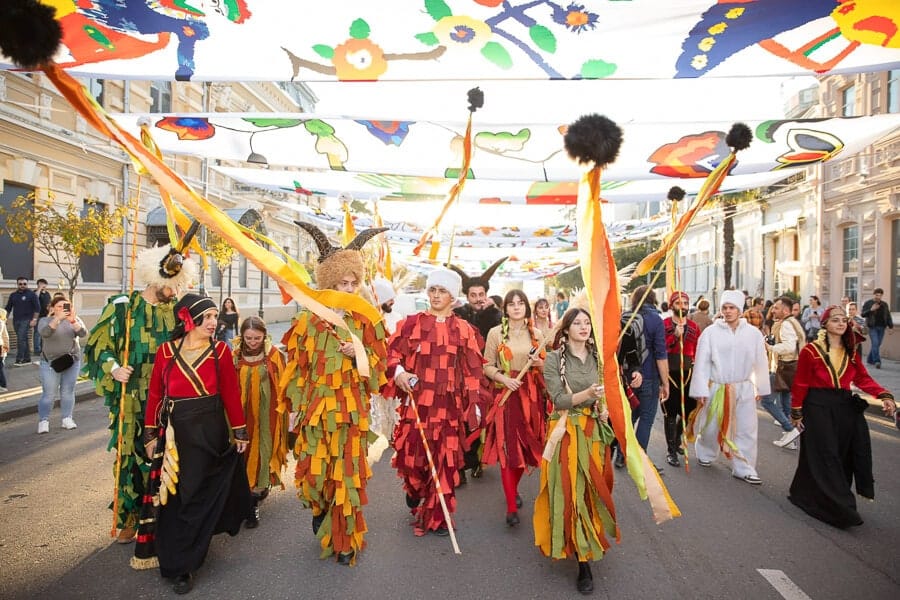
The Georgian Orthodox church in Madrid plays an important role in the life of the diaspora. The church is not only a place of worship but also a cultural and social centre. Festive events are held here, Georgian national holidays are celebrated and compatriots meet.
The church was founded by a group of young Georgians led by Vasil Laliashvili and Father Piros Gotsiridze. It was the church that provided premises for the Sunday school, which became possible thanks to an understanding of how important it is for emigrants’ children to preserve their cultural identity.
Diaspora organisations and online communities
Besides the school and the church, informal organisations and online communities play an important role in the life of the Georgian diaspora. The Facebook page “Georgian House in Spain”, created by Diana Tsikhistavi, brings together thousands of Georgians living in different parts of the country. Through this page people get information about rights, laws and vacancies, share experience and support one another.
The tradition of mutual help is one of the distinctive features of the Georgian diaspora in Spain. Complete strangers help each other: a newcomer is introduced to local rules and customs, and people look for work for them. This solidarity helps new emigrants get through the adaptation period more easily and not feel alone in a foreign country.
Interaction with Spanish society
Georgians in Spain take an active part in cultural exchanges and educational projects. Tamar Metreveli, for example, works with the Spanish association “UNIVERSAL ATENEO” and its president, Ms Gloria Ester. In 2015–2016 she taught nine-month Georgian language courses for people of various nationalities interested in learning the Georgian language and culture.
Georgian cuisine is also becoming increasingly popular among Spaniards. Georgian restaurants attract local residents, many of whom are discovering dishes such as khinkali, khachapuri and lobio for the first time. Cultural events organised by the Embassy of Georgia in Spain also help popularise Georgian culture.
The dark side: crime problems
Organised crime
Unfortunately, the Georgian diaspora in Spain is also associated with crime problems. Over the last 15 years the Spanish police have regularly carried out operations against organised criminal groups involving Georgian citizens. How much this affects the overall picture and what the statistics look like without the journalism is covered in the overview of crime in Spain. These groups specialised in various types of criminal activity:
- Burglary: break-ins at flats and houses in the suburbs of large cities
- Money laundering: setting up complex schemes to legitimise criminal proceeds
- Arms and drug trafficking: involvement in international smuggling networks
- Match-fixing: fixed matches, illegal betting
Major police operations
In recent years several large-scale operations have been carried out against Georgian criminal groups:
- 2005: about 30 “bosses” of the Russian-Georgian mafia were arrested for money laundering
- 2010: arrests under a joint operation took place in Spain, Switzerland, Germany and Austria — about 80 people were detained
- 2017: of 23 people detained in a special operation, 19 were Georgian citizens
- 2019: 25 Georgian citizens were detained on charges of burgling homes and membership of an organised criminal group
- 2023: more than 30 people suspected of membership of a “Georgian mafia” engaged in money laundering were arrested
One of the largest operations was the arrest of 61 alleged members of a Georgian criminal group specialising in burglaries. According to the police, the criminals sold the stolen goods through intermediaries, who then laundered the money and transferred it to members of the network in Georgia and other countries.
The criminal world is changing
In 2025 the Spanish newspaper El País reported significant changes in the structure of organised crime in the country. Georgian mafia leaders in Spain were being pushed out by Armenian criminals. According to a court investigation, besides money laundering and arms and drug trafficking, these criminal groups were engaged in match-fixing.
The well-known Georgian crime boss Kakhaber Shushania, who led a group in Barcelona that laundered large sums obtained through criminal activity, was one of the central figures in these cases. In January 2020 a Spanish court sentenced 27 members of a group from the former USSR, many of whom were Georgian citizens.
“Crime tourism”
Spanish law enforcement is particularly concerned about so-called “crime tourism” — criminals coming from Georgia to commit a series of thefts and then returning home. In recent operations against such groups 20–25 people were arrested each time, but most of them were released before trial, and many did not appear in court.
In April 2025 five Georgian citizens were detained on suspicion of 39 burglaries in Aragon. In most cases the criminals used tourist visas (and after 2017, visa-free travel) for short stays in Spain in order to commit crimes.
The impact on the diaspora’s reputation
The criminal activity of a minority damages the reputation of the entire Georgian community in Spain. Many law-abiding Georgian emigrants face prejudice from local people because of the actions of criminals. Diaspora representatives stress that the overwhelming majority of Georgians in Spain are honest, hard-working people who seek a better life by legal means.
The Georgian authorities and diaspora representatives are working to improve the situation, trying to separate the image of Georgian culture and people from the criminal activity of individuals. Georgia’s Ministry of Internal Affairs cooperates with the Spanish police on investigating crimes and extraditing suspects.
Tell us your situation — we reply within the hour
Social adaptation and everyday life
Housing conditions
Most Georgian emigrants rent housing during their first years in Spain. Rents in large cities, especially Barcelona and Madrid, are quite high and take up a significant part of income. Many live in shared flats with other emigrants or in live-in jobs (domestic staff, carers).
Over time, with stable work and legal status, it becomes possible to rent a flat of one’s own or even buy a home with a mortgage. However, this is available only to a small part of the diaspora with sufficient income and a long-term residence permit.
Family and children
Family values play an important role in the lives of Georgian emigrants. Many came to Spain with their families or were reunited with loved ones after obtaining legal status. The children of Georgian emigrants attend Spanish schools, where they quickly learn the language and integrate into local society.
However, there is the problem of preserving Georgian identity in the second generation of emigrants. Children who grow up in Spain often speak Spanish better than Georgian and identify more with Spanish culture. That is why Georgian Sunday schools and cultural centres, which help children keep a connection with their parents’ homeland, matter so much.
The number of mixed marriages between Georgians and Spaniards is growing. This is a natural process of integration that leads to deeper involvement in local society, but it also raises questions about preserving Georgian culture and language in such families.
Healthcare and social services
Georgians living legally in Spain have access to the public healthcare system. Medical care is provided free or for a small fee, which is an important advantage compared with Georgia. However, waiting for a specialist appointment can take months, and serious operations involve long waits.
The state also offers various social services for immigrants: free Spanish courses, help finding work, legal advice and social benefits for people on low incomes. Georgians make active use of these opportunities, which helps them adapt to their new life.
Cultural similarities and differences
Many Georgians note similarities between the Spanish and Georgian characters. Respect for tradition, strong family ties, large families, hospitality — all this is typical of both cultures. Spaniards, like Georgians, love and look after their family members, value friendship and know how to have fun.
However, there are also significant differences. Spaniards are more disciplined in bringing up children and prepare them for independent life from an early age. In Spain, young people who come of age are expected to earn their own living and build a career without relying on their parents. This contrasts with the Georgian tradition, where parents often support their children before and after they start families of their own.
The Spanish way of life also has a clearer separation between work and personal time. The siesta, late dinners and respect for free time all take some getting used to for Georgians accustomed to a different rhythm of life.
Legal status and obtaining documents
Residence permits and work permits
To live and work legally in Spain, Georgians need to obtain a residence permit. There are several routes to legal status:
- Employment contract: the employer arranges the work authorisation and residence permit
- Digital nomad residence permit: remote work for an employer outside Spain.
- Start-up visa: for innovative projects that are in demand in Spain.
- Family reunification: people who already hold a residence permit can bring close relatives
- Marriage to an EU citizen: mixed marriages give the right to a residence permit
- Asylum: in the past many Georgians tried to obtain political asylum, although such applications had limited success
Obtaining documents requires patience, knowledge of the law and often the help of lawyers. Many Georgians live in the country without papers during their first years until they find a way to regularise their status.
Citizenship
After several years of legal residence in Spain (usually 10 years) it becomes possible to apply for Spanish citizenship. This requires passing exams on the language, history and constitution of the country, as well as renouncing Georgian citizenship (Spain does not recognise dual citizenship except in special cases).
Getting a Spanish passport is a difficult question for many Georgians. On the one hand, it opens up the full rights of an EU citizen, including freedom to travel and work in any EU country. On the other hand, having to renounce Georgian citizenship is seen by many as a betrayal of their homeland. So many prefer to keep permanent resident status without taking citizenship.
Economic ties between Georgia and Spain
Remittances
Remittances from emigrants, including from Spain, play a significant role in Georgia’s economy. Georgians regularly send money to relatives and loved ones back home, supporting their families. According to various studies, remittances make up a noticeable share of many Georgian families’ income.
Money transfer systems such as Western Union and MoneyGram, as well as bank transfers and online services, are widely used by the Georgian diaspora. The amounts sent vary with the emigrant’s income, but on average come to a few hundred euros a month.
Trade relations
Trade links between Georgia and Spain are poorly developed but have growth potential. Georgia exports wine, mineral water, nuts and some agricultural products to Spain. Spain, in turn, exports technology, equipment and food to Georgia.
The Georgian diaspora in Spain could act as a bridge in developing economic ties between the two countries. Some entrepreneurs already import Georgian products — wine, cheese, spices — for sale in Georgian restaurants and shops. So far, however, the scale of this activity remains modest.
Tourism
Visa-free travel encourages tourism in both directions. Georgians actively visit Spain as tourists, enjoying its cultural attractions, beaches and historical monuments. Barcelona, Madrid, Seville and the Mediterranean coast attract thousands of Georgian tourists every year.
In the other direction, Spaniards’ interest in Georgia as a tourist destination is gradually growing. Georgian wine and cuisine, the Caucasus mountains, ancient monasteries and the hospitality of local people attract more and more Spanish travellers. The Georgian diaspora actively promotes its homeland, telling Spanish acquaintances about Georgia’s beauty and sights.
Trips home
Most Georgian emigrants try to visit Georgia regularly. Usually this happens once or twice a year, during holidays. Visa-free travel with the EU has made such trips easier — there is no longer any need to get a visa every time to return to Spain.
Trips home are an important part of keeping a connection with Georgia. Emigrants see family and friends, visit the places they grew up in and give their children a chance to experience Georgian culture. Yet each such visit is also a reminder of how much their lives have changed and how much they lost by leaving their homeland.
What homeland means
For Georgian emigrants the idea of homeland has a special meaning. It is not just a geographical place but a set of memories, emotions and connections. The native language spoken at home and at gatherings with compatriots. Georgian food cooked for celebrations. Traditions and customs passed on to children. Songs and dances that bring back memories of youth.
Diana Tsikhistavi says: “I miss my friends, my family and the nature of my homeland all the time. I want to see Georgia as a country where happy Georgians live, where people walk down the street with smiling faces, where nobody has to stand with an outstretched hand.” This dream of a prosperous, happy Georgia unites many emigrants who, despite living abroad, continue to love their homeland and wish it well.
Current challenges and prospects
Integration vs identity
One of the main problems of the Georgian diaspora is the balance between integrating into Spanish society and preserving Georgian identity. On the one hand, a successful life in Spain requires mastering the language, understanding the culture and accepting local norms and values. On the other hand, it is important not to lose one’s roots or forget one’s native language and traditions.
This problem is especially acute for emigrants’ children. The second generation, raised in Spain, often feels more Spanish than Georgian. They speak Spanish fluently, have Spanish friends and share Spanish values. Georgian remains the language of home for them, and Georgia a distant country they visit in summer.
Georgian Sunday schools, cultural centres and family traditions play an important role in preserving identity. However, it is impossible to stop the process of assimilation completely. The point is to find a harmonious balance that lets people feel both Georgian and part of Spanish society at the same time.
The political situation
Political processes in Georgia affect the life of the diaspora in Spain. The events of autumn 2025 related to the elections and Georgia’s foreign policy course caused concern among emigrants. The threat of visa-free travel with the EU being cancelled and worsening relations with the West could have a negative impact on Georgians’ ability to travel and work in Europe.
The Georgian diaspora in Spain, as in other countries, is divided along political lines. Some support Georgia’s current government, while others favour a more pro-Western course. These disagreements sometimes lead to arguments and conflicts within the community, although most try to maintain unity regardless of political preferences.
Economic prospects
The economic situation in Spain also affects the lives of Georgian emigrants. After the 2008 financial crisis and the COVID-19 pandemic the Spanish labour market remains difficult. Unemployment, especially among young people and immigrants, is fairly high. This makes finding work harder and increases competition for available vacancies.
Nevertheless, Spain remains an attractive country for Georgian emigrants thanks to a higher standard of living than in Georgia, a developed social protection system and opportunities for children. Many Georgians, despite the difficulties, do not plan to return home, seeing better prospects in Spain for themselves and their families.
The role of new technologies
The development of the internet and social media has made life much easier for the Georgian diaspora. Emigrants can now easily keep in touch with relatives in Georgia via video calls and share news, photos and videos. Groups on Facebook, Telegram and WhatsApp bring together Georgians living in different Spanish cities, helping them share information and support one another.
Online platforms also let emigrants follow events in Georgia, read Georgian media and watch Georgian television. This helps them keep a connection with their homeland and not feel completely cut off from Georgian society. Emigrants’ children can learn Georgian through online courses and watch Georgian cartoons and films.
Conclusion: between two worlds
The Georgian diaspora in Spain is a community of people living between two worlds. On the one hand, they are building a new life in Spain, learning the language and culture, working, raising children and integrating into local society. On the other hand, they keep their love for Georgia, feel nostalgic for their homeland and strive to pass on Georgian identity to their children.
The path of emigration is always a path of sacrifices and compromises. Many Georgians who came to Spain left behind successful careers, loved ones and a familiar way of life. They had to start from scratch, accept jobs below their qualifications and overcome the language barrier and cultural differences. But they did it for the sake of a better future for themselves and their children.
Today the Georgian community in Spain numbers tens of thousands of people. They are hard-working, talented people who contribute to Spanish society. They work in various sectors of the economy, create cultural centres and educational projects, and introduce Spaniards to Georgian culture and cuisine. At the same time they keep their connection with their homeland, support families in Georgia and pass on to their children a love for the land of their ancestors.
Georgians in Spain are a living bridge between two ancient Iberian countries, separated by seas and mountains but united by the universal values of family, tradition and hospitality. Their story is the story of millions of emigrants around the world — people who cross borders in search of a better life but never forget their roots.
This article is based on interviews with members of the Georgian diaspora, publications in Georgian and Spanish media, data from research organisations and law enforcement reports for the period from 2016 to 2025.
- Can you move to Spain with a Georgian passport
- Introduction: two Iberias — the historical link between two peoples
- The history of Georgian migration to Spain
- Visa-free travel in 2017: a new era of migration
- Where they settle: Barcelona, Madrid and other cities
- Economic life and employment
- Cultural life and preserving identity
- The dark side: crime problems
- Social adaptation and everyday life
- Legal status and obtaining documents
- Economic ties between Georgia and Spain
- Current challenges and prospects
- Conclusion: between two worlds