Moving to Spain from Israel
Israeli citizens move to Spain on the general grounds for foreigners. The routes, the taxes of both countries and a preparation plan up to getting your card are covered in the article moving from Israel to Spain.
- No visa is needed for short trips. Israel is on the list of countries whose citizens enter the Schengen area visa-free — Annex II to Regulation (EU) 2018/1806. To move for longer than 90 days you need a national visa or a residence authorisation.
- Remote workers can apply from inside Spain. If you are in the country legally — for example, after a visa-free entry — the teleworker authorisation is requested on the spot. From Israel, only the visa can be applied for, through the consulate. This is how the Unidad de Grandes Empresas (UGE, the large companies unit) describes it.
- The criminal record certificate comes from the country where you lived for the last two years. All countries of residence during the five years before the application are checked. Israel has been a party to the Hague Convention since 1978, so Israeli documents are certified with an apostille.
- Citizenship — the general rule and the exception for Sephardic Jews. The usual requirement is ten years of residence and a declaration renouncing your previous citizenship. The Civil Code makes an exception for Sephardic Jews: two years of residence are enough, and there is no need to renounce previous citizenship — Articles 22 and 23. More details in the article on dual citizenship in Spain.
Introduction: a thousand-year history on the Iberian Peninsula
The history of the Jews in Spain is one of the most dramatic and significant chapters of the Jewish diaspora. For more than a thousand years the Iberian Peninsula was home to a flourishing Jewish community that made an invaluable contribution to European culture, science and philosophy. The Jews of Spain, known as Sephardim (from the Hebrew word “Sepharad” — Spain), lived through periods of unprecedented prosperity and terrible persecution, leaving a deep mark on the history of both Spain and the Jewish people as a whole.
The early period: Jews under Rome and the Visigoths (1st–8th centuries)
The Roman period
The first Jews began settling on the Iberian Peninsula as early as the 1st–2nd centuries AD, in the time of the Roman Empire. According to some traditions, Jewish communities appeared here even earlier — after the destruction of the First Temple in Jerusalem in the 6th century BC, when Phoenician traders brought Jews to their colonies on the peninsula. There is even a legend that the gold for the gates of Solomon’s Temple was brought from Spain.
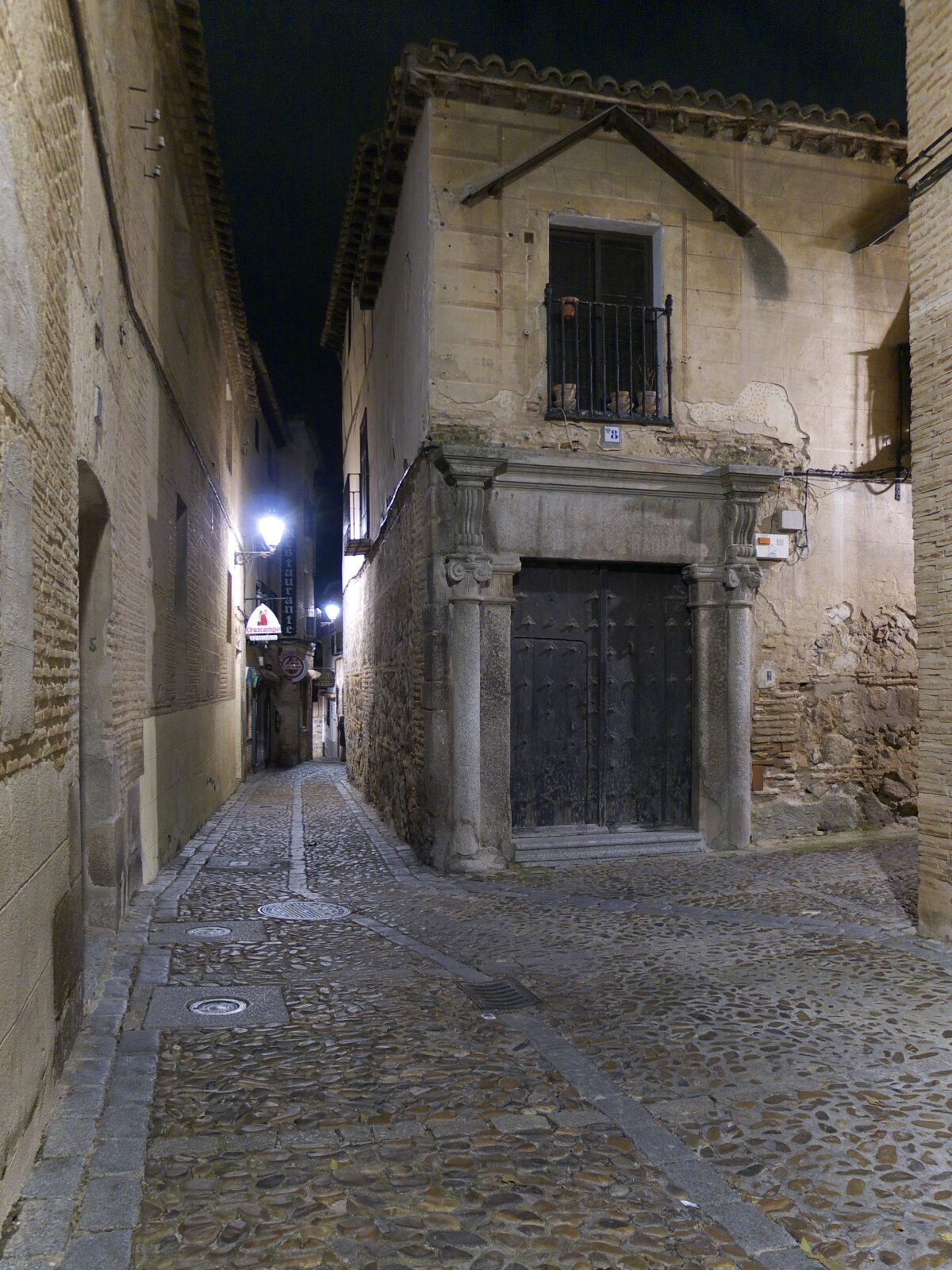
In the Roman period Jewish communities lived relatively peacefully, engaged in trade, crafts and agriculture. They settled in large cities — Toledo, Córdoba, Seville, Tarragona. Toledo became the most important of them: the Jewish quarter with its two surviving synagogues still shapes the look of the city — what it is like today is shown in the guide to Toledo.
The Visigothic period: persecution begins
The situation changed radically after the fall of the Roman Empire, when the Iberian Peninsula came under the rule of the Visigoths (5th–8th centuries). At first, as Arians, the Visigoths tolerated the Jews. However, after King Reccared I converted to Catholicism in 589, a period of cruel persecution began.
The Sixth Council of Toledo (638) decreed that only Catholics had the right to live in Spain. Jews faced forced baptism, confiscation of property, and bans on trade and on practising their faith in public. At the end of the 7th century King Egica even tried to enslave all Jews. Many were forced to flee the country or continue practising Judaism in secret.
The Golden Age: Jews under Muslim rule (8th–13th centuries)
The Arab conquest and a new era
In 711 Arabs and Berbers led by Tariq ibn Ziyad crossed the Strait of Gibraltar and quickly conquered most of the Iberian Peninsula, creating the state of Al-Andalus. For the Jews this was a real liberation. The Muslim rulers pursued a policy of relative tolerance towards the “People of the Book” — Jews and Christians.
The Caliphate of Córdoba: culture flourishes
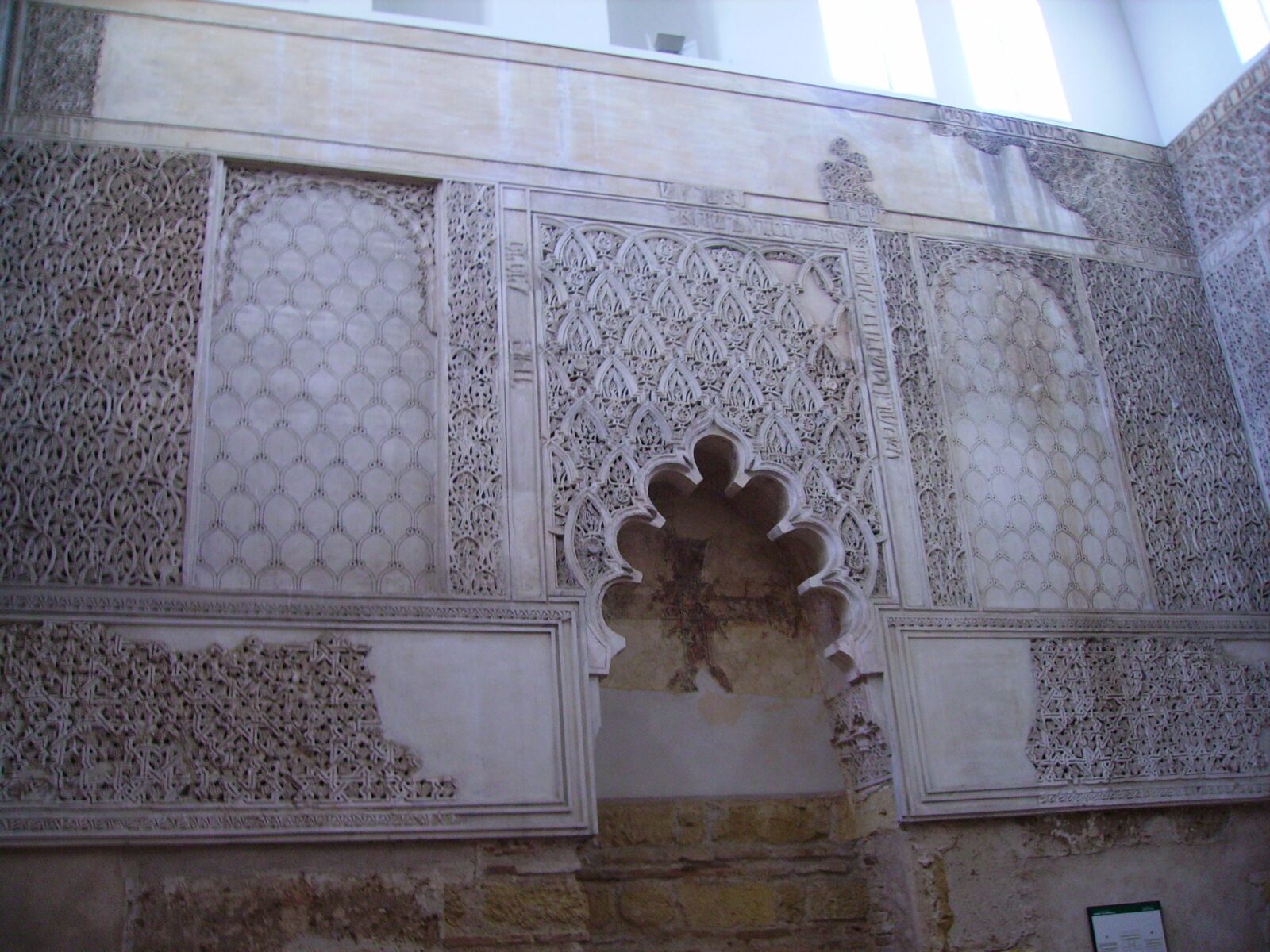
Jewish culture reached its peak during the Caliphate of Córdoba (929–1031). Córdoba became one of the largest and richest cities of the medieval world, with a population of about 500,000, and a centre of science, philosophy and art.
Jews held high positions at the caliphs’ court. A striking example was Hasdai ibn Shaprut (915–970) — physician, diplomat and adviser to Caliph Abd al-Rahman III. He not only dealt with affairs of state but also actively supported Jewish culture and corresponded with Jewish communities around the world, including the legendary Khazar kingdom.
Cultural and intellectual prosperity
This period (10th–13th centuries) is rightly called the “Golden Age” of Spanish Jewry. In this era the Sephardic Jews gave the world:
Philosophers and thinkers:
- Solomon ibn Gabirol (1021–1058) — philosopher and poet, author of the treatise “The Fountain of Life”
- Moses Maimonides (Rambam, 1138–1204) — the greatest Jewish philosopher of the Middle Ages, author of “The Guide for the Perplexed” and codifier of Jewish law
- Judah Halevi (1075–1141) — outstanding poet and philosopher, author of the book “Kuzari”
Scientists and physicians:
- Jewish physicians had such a reputation that they served at the courts of both Muslim and Christian rulers
- Translators of Jewish origin played a key role in passing Arabic and Greek science on to Christian Europe
Poets and writers:
- A unique tradition of religious and secular poetry in Hebrew developed
- Liturgical works were created, many of which are still used in synagogues today
Jews owned property and worked in trade, crafts, medicine and finance, and served as translators and diplomats. In the large cities — Córdoba, Toledo, Granada, Seville — there were thriving Jewish quarters (juderías) with synagogues, schools and community institutions.
The Christian Reconquista: conditions worsen (11th–14th centuries)
The beginning of change
From the 11th century the Christian kingdoms launched an active offensive against Muslim territories — a process known as the Reconquista. At first Jews continued to play an important role in the Christian states too:
- They served as financial advisers to kings
- They held posts as tax collectors
- They worked as diplomats and translators
- They continued to develop science and culture
Toledo, retaken by the Christians in 1085, became the largest centre of Jewish learning in Europe. It was home to the famous Toledo School of Translators, where Jewish scholars translated Arabic and Greek texts into Latin, passing the heritage of antiquity on to Christian Europe.
Rising tensions
From the 13th century, however, the situation of the Jews began to deteriorate. The Fourth Lateran Council (1215) established discriminatory laws against Jews throughout Europe. In Spain this took the form of:
- Compulsory distinguishing badges on clothing
- Restrictions on where they could live (the creation of closed Jewish quarters)
- Bans on certain professions
- Pressure from the Catholic Church to convert to Christianity
The pogroms of 1391: a turning point
The pogroms of 1391 were a terrible turning point. Driven by religious fanaticism, Christian mobs attacked Jewish communities throughout Spain. In Seville, Córdoba, Valencia, Barcelona and other cities thousands of Jews were killed, synagogues destroyed and sacred books burned.
Many Jews accepted baptism to save their lives. Thus arose a special category of “New Christians” or Marranos (from the Spanish “marrar” — to err, or the Arabic “muharram” — forbidden). A significant proportion of these baptised Jews secretly continued to practise Judaism, which later became one of the main reasons for establishing the Inquisition.
The Spanish Inquisition and the expulsion (1478–1492)
The establishment of the Inquisition
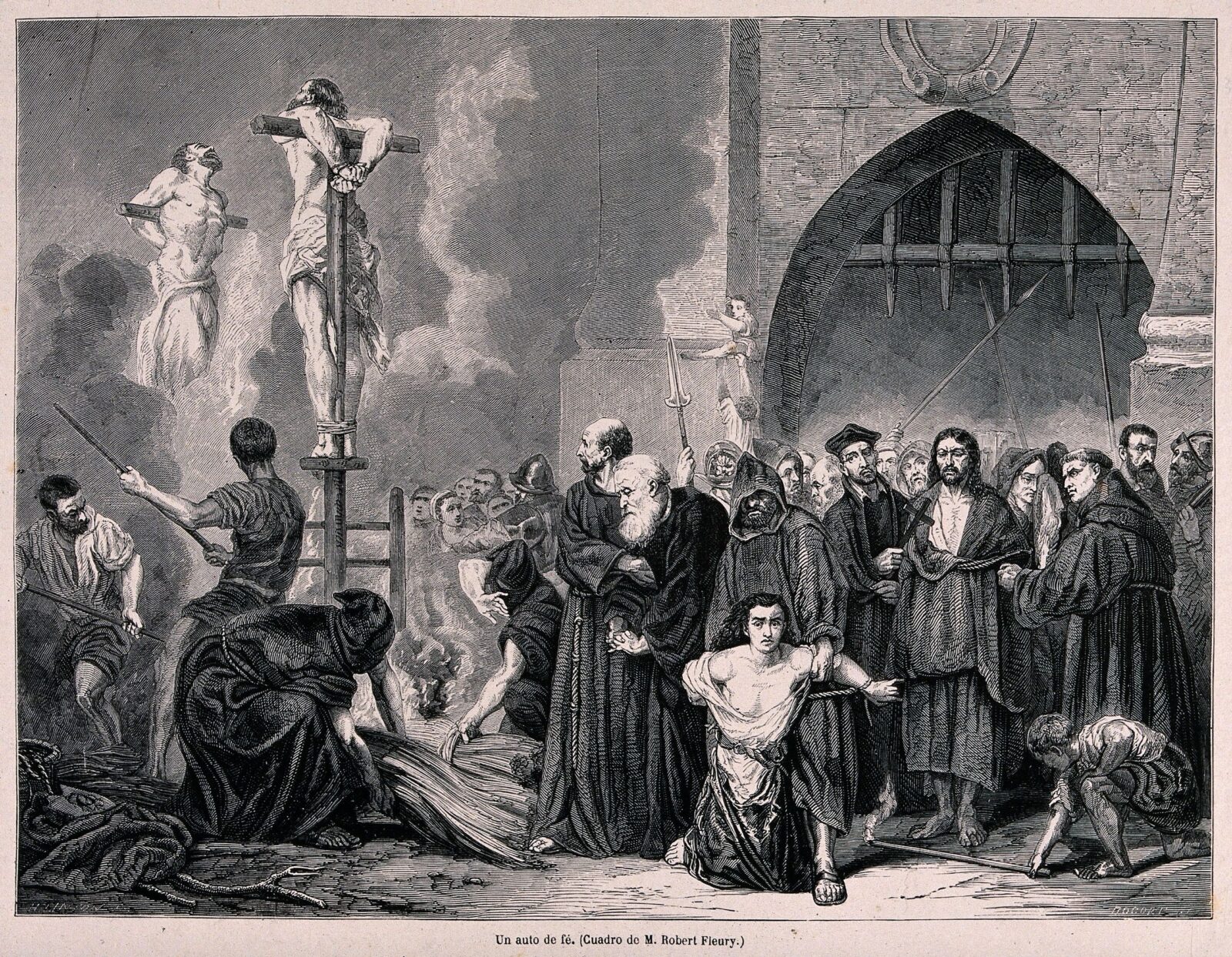
In 1478 the Catholic Monarchs Ferdinand II of Aragon and Isabella I of Castile obtained a papal bull to establish the Spanish Inquisition. Officially it was created to fight heresy among the New Christians, who were suspected of secretly practising Judaism.
The Grand Inquisitor was the Dominican friar Tomás de Torquemada (1420–1498), notorious for his cruelty. Under him the Inquisition became a machine of terror:
- Mass arrests were made on the basis of denunciations
- Torture was used to extract confessions
- The property of the accused was confiscated
- The condemned were burned at the stake during public ceremonies — the autos-da-fé
By various estimates, during the existence of the Spanish Inquisition (1478–1834) between 3,000 and 5,000 people were executed and tens of thousands were persecuted.
The Alhambra Decree: the expulsion of 1492
On 31 March 1492 in Granada, the last city retaken from the Muslims, the Catholic Monarchs signed the Alhambra Decree (the Edict of Expulsion of the Jews). The document gave all Jews practising Judaism four months — until 31 July 1492 — to either accept baptism or leave Spain.
The conditions were draconian:
- It was forbidden to take out gold, silver and jewellery
- Property was sold for next to nothing
- Jews were forced to part with homes where their ancestors had lived for centuries
Number of those expelled: By various estimates, between 100,000 and 200,000 Jews left Spain. About 50,000 accepted baptism in order to stay.
Where the exiles fled:
- Portugal (but in 1497 forced baptism was carried out there too)
- The Ottoman Empire (Turkey, Greece, the Balkans) — Sultan Bayezid II warmly welcomed the refugees
- North Africa (Morocco, Algeria, Tunisia)
- Italy (especially Venice, Livorno, Rome)
- The Netherlands (Amsterdam became a major Sephardic centre)
- Later — the New World (Latin America, the Caribbean)
Interestingly, many historians link the expedition of Christopher Columbus, who set sail for the shores of America on 3 August 1492 (a day after the final deadline for the Jews), with the expulsion: there were Marranos among the crew and financiers of the expedition, and Columbus himself may have had Jewish roots.
The Marranos: secret Jews (15th–18th centuries)
A double life
The baptised Jews who remained in Spain and Portugal found themselves in an extremely difficult position. Many of them, having formally converted to Christianity, secretly continued to practise Judaism. These crypto-Jews were called Marranos (some researchers believe the term comes from the word for “pig” and was an insult; others link it to the Arabic word for “forbidden”).
The life of the Marranos was full of danger:
- They went to church but lit Sabbath candles at home
- They baptised their children but circumcised them in secret
- They observed Jewish holidays disguised as Christian ones
- They passed on traditions orally, since keeping Jewish books was mortally dangerous
- They used special codes and symbols to recognise fellow believers
Persecution by the Inquisition
The Marranos became the main target of the Inquisition. Anyone could denounce a neighbour, and an investigation would begin. Signs of “Judaising” included:
- Wearing clean clothes on Saturday
- Refusing pork
- Lighting candles on Friday evening
- Celebrating Jewish holidays
Thousands of Marranos were arrested, tortured and executed. Their property was confiscated for the benefit of the Crown and the Church, which made the persecution economically profitable.
The Marrano diaspora
Over time many Marranos managed to flee to more tolerant countries. In Amsterdam, Venice and London there were communities of “Portuguese Jews” — descendants of Marranos who returned to openly practising Judaism. Some families preserved secret Jewish traditions for centuries, even after forgetting their original meaning.
Sephardic culture and the Ladino language
The language of the Sephardim
The Jews expelled from Spain kept the language of their homeland, which over time turned into a distinct Sephardic language known as Ladino (also Judezmo, Judeo-Spanish).
Features of Ladino:
- Its basis is the medieval Castilian Spanish of the 15th century
- Enriched with Hebrew and Aramaic borrowings
- Includes words from Turkish, Greek, French and Italian (depending on where speakers lived)
- Written in Hebrew letters (the “Rashi” script)
Ladino became the language of the Sephardim’s everyday communication, literature, poetry and songs. Bible translations, religious commentaries and works of fiction were written in it. The tradition of Sephardic songs is especially rich — the romancero, ballads about love, history and exile.
Cultural features
Sephardic culture is a unique synthesis of:
- Spanish-Jewish traditions: cuisine (using olive oil, vegetables, rice), music, customs
- Religious practice: a distinct prayer rite (nusach), different from the Ashkenazi one
- Philosophical tradition: a rationalist approach, the influence of Greek philosophy (Maimonides)
- Openness to secular sciences: mathematics, astronomy, medicine, poetry
Having settled across the Mediterranean, the Middle East and Western Europe, the Sephardim preserved their identity, language and customs for centuries, regarding themselves as exiles from Spain even 400–500 years after the expulsion.
Modern Spain: return and remembrance (19th–21st centuries)
A new era of religious freedom
After the abolition of the Inquisition in 1834 and the adoption of a liberal constitution in 1869, freedom of religion was permitted in Spain. However, the first synagogue after the expulsion opened only in 1917, in Madrid.
In the 20th century the Jewish community in Spain slowly recovered. During the Civil War (1936–1939) and the Franco regime (1939–1975) Jewish life was restricted, although Spain gave refuge to some Jews fleeing the Nazis.
The Jewish community today
Today about 40,000–50,000 Jews live in Spain, a small fraction of the former community. The main centres:
In size this is comparable to other large communities in the country — for example, the Russian diaspora — and in many ways it is organised similarly: schools, cultural centres, mutual help when moving.
Madrid:
- The largest community (about 3,500 people)
- Five synagogues
- Jewish schools and cultural centres
Barcelona:
- The second-largest community
- An active cultural life
- Surviving monuments of the medieval Jewish quarter
Málaga, Marbella:
- Growing communities
- Many returnees from Latin America and Israel
How a move specifically from Israel works — the grounds, documents and procedure — is covered separately: moving from Israel to Spain.
Ceuta and Melilla:
- Autonomous cities in North Africa
- Traditional Sephardic communities
The Sephardic return law (2015)
In 2015 the Spanish parliament passed a historic law granting descendants of the expelled Sephardim the right to Spanish citizenship without renouncing their existing citizenship and without a requirement to live in Spain.
Conditions:
- Proof of Sephardic origin: a Sephardic surname, documents, knowledge of Ladino. Sephardic surnames are the same Castilian surnames of the 15th century, and the Spanish system of names and two surnames has hardly changed since then
- A certificate from a recognised Sephardic community
- Passing an exam on the Spanish language and the basics of the constitution
The programme ran from 2015 to 2019 and was extended twice. During this time more than 35,000 people from around the world obtained citizenship — from Israel, Turkey, Morocco, Venezuela, Argentina and the USA.
The application window has closed, but the question of keeping your previous passport remains relevant for everyone heading towards Spanish citizenship by another route: how Spain views dual citizenship and who the exceptions are made for. Today the usual route starts with residence — all the grounds are listed in the overview of Spanish residence permits.
Preserving the heritage
Spain is working actively to preserve its Jewish heritage:
The “Routes of Sepharad” network (Caminos de Sefarad): It brings together 22 cities with surviving Jewish quarters and monuments: Toledo, Córdoba, Girona, Segovia, Ávila and others.
Museums:
- The Sephardic Museum in Toledo (in a 14th-century synagogue building)
- The Jewish Museum in Barcelona
- The Santa María la Blanca Synagogue in Toledo
Academic research: Active research is being done on Sephardic history, culture and the Ladino language.
Restoration of monuments: Restoration of medieval synagogues (Toledo, Córdoba), Jewish quarters and cemeteries.
The digital nomad residence permit and the start-up visa: new ways to move to Spain
Besides historical repatriation programmes, modern Spain offers attractive opportunities to move for professionals and entrepreneurs from all over the world, including members of the Jewish diaspora.
The Digital Nomad Visa
Since 2023 Spain has joined the countries offering a special visa for remote workers — the Digital Nomad Visa. This permit allows you to live legally in Spain and work remotely for a foreign company or run a business abroad.
Main requirements:
Age and legal status:
- Over 18 years old
- No criminal record in Spain or the country of residence for the last 5 years
Professional activity:
- Remote work for a foreign company
- Freelancing with foreign clients
- Owning a business registered outside Spain
- Working for Spanish companies is not allowed (above 20% of income)
Financial requirements:
- Minimum income: €2,849 a month (€34,188 a year) — 200% of the Spanish minimum wage (SMI) for 2026
- For a family: +75% of the SMI for a spouse (+€12,821 a year), +25% of the SMI for each child (+€4,274 a year)
- Savings of €31,752 or more for the main applicant
Supporting documents:
- An employment contract with a foreign employer, or
- Contracts with clients (for freelancers), or
- Documents showing you run a business
- Proof of stable income over the last 12 months
Health insurance:
- A policy with cover in Spain (for employees)
Duration and renewal:
- Initial visa: 3 years
- Can be extended to 5 years
- After 5 years of residence — the right to permanent residence
Taxation:
- A preferential regime for new residents: in the first year you can pay tax under special rules
- A simplified system for the self-employed
Advantages:
- You can bring your family (spouse, children, dependent parents)
- Free movement within the Schengen area
- Access to Spanish healthcare and education
- Spain’s quality of life, climate and culture
The Startup Visa
For entrepreneurs with innovative projects, Spain offers a start-up visa, introduced under the law supporting the start-up ecosystem.
Who it suits:
- Founders of start-ups with innovative projects
- Start-up teams (up to 5 founders)
- Highly qualified specialists hired by start-ups
Requirements:
An innovative project:
- The start-up must be at an early stage of development
- The project must be innovative and technology-based
- Potential to scale and grow
Savings:
- At least €31,752 for the main applicant
- +€11,907 for a spouse
- +€3,969 for each child
Project approval: The project must be approved by a special body — ENISA (the National Innovation Company) or accredited incubators/accelerators.
Business plan: A detailed plan describing:
- The project idea and how it is innovative
- The target market and competitor analysis
- The financial model and forecasts
- The team and the founders’ experience
The procedure:
-
Preparing documents:
- Business plan
- Proof of financial means
- Documents on professional experience
- No criminal record
-
Applying for approval:
- An application to ENISA or an accredited organisation
- Review of the project (up to 3 months)
-
Getting the visa:
- After the project is approved — submitting the visa application
- An initial visa for 3 years
- Possible extension to 5 years
Advantages:
- Tax benefits: a special regime for start-ups (15% corporate tax instead of 25%)
- Access to funding: government support programmes, grants
- Ecosystem: access to incubators, accelerators, networking
- Family option: residence permits for spouse and children
- Path to permanent residence: after 5 years you can obtain permanent residence
Limitations:
- You must actively develop the project
- Regular reporting to ENISA
- The start-up must create jobs in Spain
Comparing the two types of visa
| Parameter | Digital Nomad | Startup Visa |
|---|---|---|
| Target audience | Remote workers, freelancers | Entrepreneurs with innovative projects |
| Minimum income | €2,849/month | No income requirement, but savings are needed |
| Savings | – | From €31,752 |
| Validity | 3 years (extendable to 5 years) | 3 years (extendable to 5 years) |
| Approval | Standard procedure | ENISA approval required |
| Taxes | Benefits in the first year | 15% corporate tax for start-ups |
| Business in Spain | Not allowed (above 20%) | Mandatory |
Current challenges and the future
Antisemitism in modern Spain
According to recent research, Spain is considered one of the safest countries in Europe for Jews. The level of antisemitic incidents is significantly lower than in France, Germany or the United Kingdom. However, there are certain challenges:
- Growing anti-Israel sentiment against the backdrop of the Israeli-Palestinian conflict
- Periodic outbreaks of antisemitism on social media
- The need to guard synagogues and Jewish institutions
Restoring dialogue
The Spanish state is actively working on:
- Educational programmes on Jewish heritage
- Events commemorating the victims of the Inquisition and the Holocaust
- Supporting research into Sephardic culture
- Developing interfaith dialogue
Ladino: a language on the verge of extinction
The Sephardic language Ladino is endangered. The number of speakers is estimated at only 60,000–100,000 people worldwide, most of them elderly. The Holocaust destroyed a large part of the Ladino-speaking communities in the Balkans. Today efforts are being made to preserve the language:
- Israel’s National Academy is working on standardising Ladino
- UNESCO has put Ladino on its list of languages in need of protection
- Courses and online resources are being created
- Sephardic songs and folklore are being recorded and published
Conclusion
The history of the Jews in Spain is a story of rises and falls, prosperity and tragedy, exile and return. The Sephardim made an invaluable contribution to Spanish, European and world culture. Their philosophical works, scientific discoveries and poetry have become part of the heritage of all humanity.
The expulsion of 1492 was one of the greatest tragedies in Jewish history, but it could not destroy Sephardic identity. For more than 500 years Sephardic Jews scattered around the world preserved their language, traditions and memory of their Spanish homeland.
Today Spain acknowledges its responsibility for a historical injustice and is taking steps towards reconciliation. The Sephardic return law, the preservation of Jewish heritage and the development of the Jewish community all show the country’s willingness to restore the memory of Jewish Spain.
For today’s professionals and entrepreneurs, Spain opens new opportunities through the digital nomad visa and the start-up visa — programmes that let you live, work and build a business in a country with an exceptionally rich cultural heritage, a wonderful climate and a high quality of life.
The story of the Sephardim goes on, and Spain is once again becoming a place where Jewish culture can flourish.
Useful resources
Jewish organisations in Spain:
- Federation of Jewish Communities of Spain (FCJE)
- Jewish Community of Madrid
- Jewish Community of Barcelona
Museums and cultural centres:
- Sephardic Museum (Toledo)
- The “Routes of Sepharad” network
Visa information:
- Official website of the Spanish Ministry of Foreign Affairs
- Spanish consular services
Research and education:
- Centre for Sephardic Studies (Israel)
- Ladino Language Academy
This article is based on historical sources, academic research and official data from the Spanish government. Published: December 2025.
- Moving to Spain from Israel
- Introduction: a thousand-year history on the Iberian Peninsula
- The early period: Jews under Rome and the Visigoths (1st–8th centuries)
- The Golden Age: Jews under Muslim rule (8th–13th centuries)
- The Christian Reconquista: conditions worsen (11th–14th centuries)
- The Spanish Inquisition and the expulsion (1478–1492)
- The Marranos: secret Jews (15th–18th centuries)
- Sephardic culture and the Ladino language
- Modern Spain: return and remembrance (19th–21st centuries)
- The digital nomad residence permit and the start-up visa: new ways to move to Spain
- Current challenges and the future
- Conclusion
- Useful resources