How to move to Barcelona: the complete guide
Moving to Barcelona is more than a change of city. It is a fresh start, a new rhythm, new surroundings and a new attitude to life. Barcelona is one of the few cities that combines European quality of life, a warm climate, the sea, culture and comfort in one place. Many of those who have already decided to emigrate to Barcelona admit that the decision changed not only their day-to-day life but also how they see the world, their careers and themselves.
The city is not just beautiful: it is lively, warm and inspiring. There is more real life here than almost anywhere else: it does not rush, it flows at the right pace. It is a place where you want to stay, where it is easy to breathe and where you may well want to spend years of your life.
Who this article is for
This guide will be useful to:
- People relocating for work
- University and language students
- Families with children
- Retirees who want to live in a warm climate
- Freelancers and remote workers (digital nomads)
- People moving to join a partner or spouse
If you have not settled on the city yet, compare it with the alternatives: Barcelona itself is described in the city overview, and how it ranks on rents and incomes is shown in the ranking of Spanish cities.
This guide covers everything: from visa types and housing in Spain to getting a Spanish residence permit, paperwork, job hunting and life after the move. We have gathered tested advice, real cases, up-to-date figures and the pitfalls that promotional brochures leave out.
If you want to live in Barcelona, this article will help you do it confidently, sensibly and without unnecessary stress.
Why Barcelona in particular
Advantages of living in Barcelona
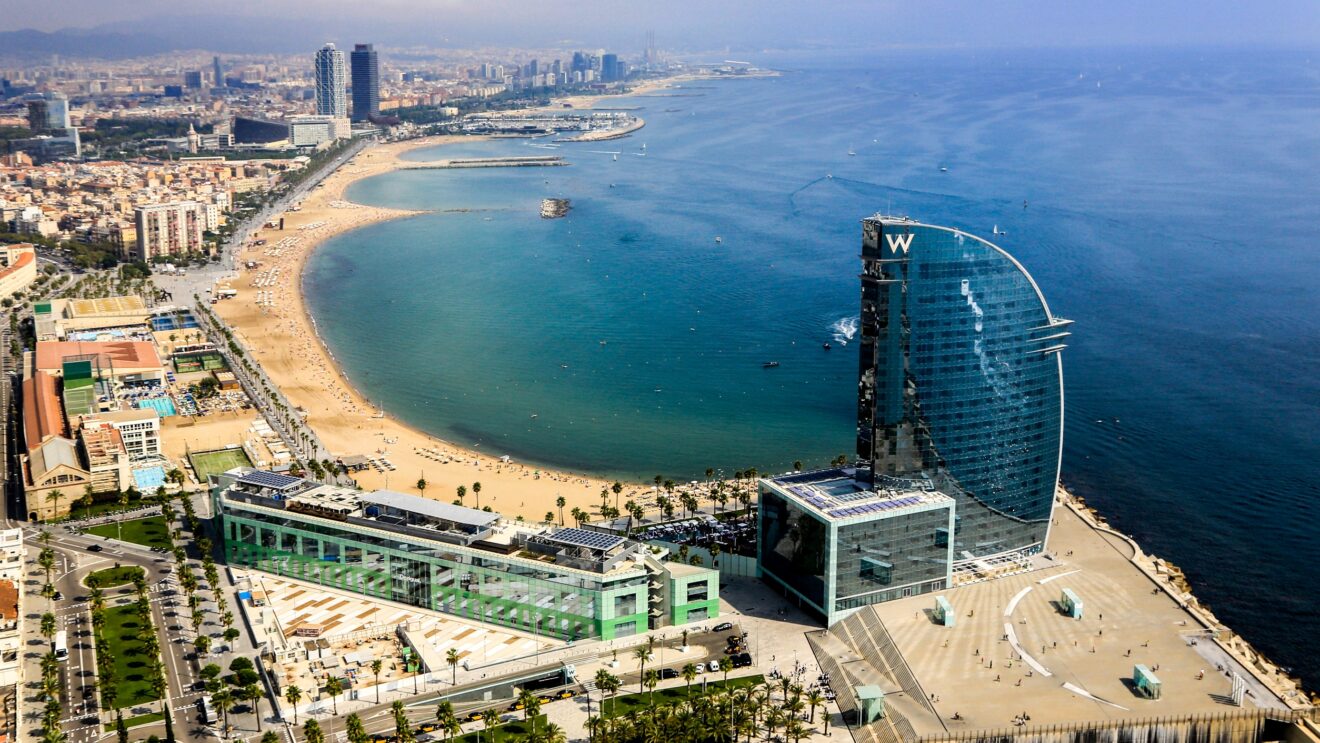
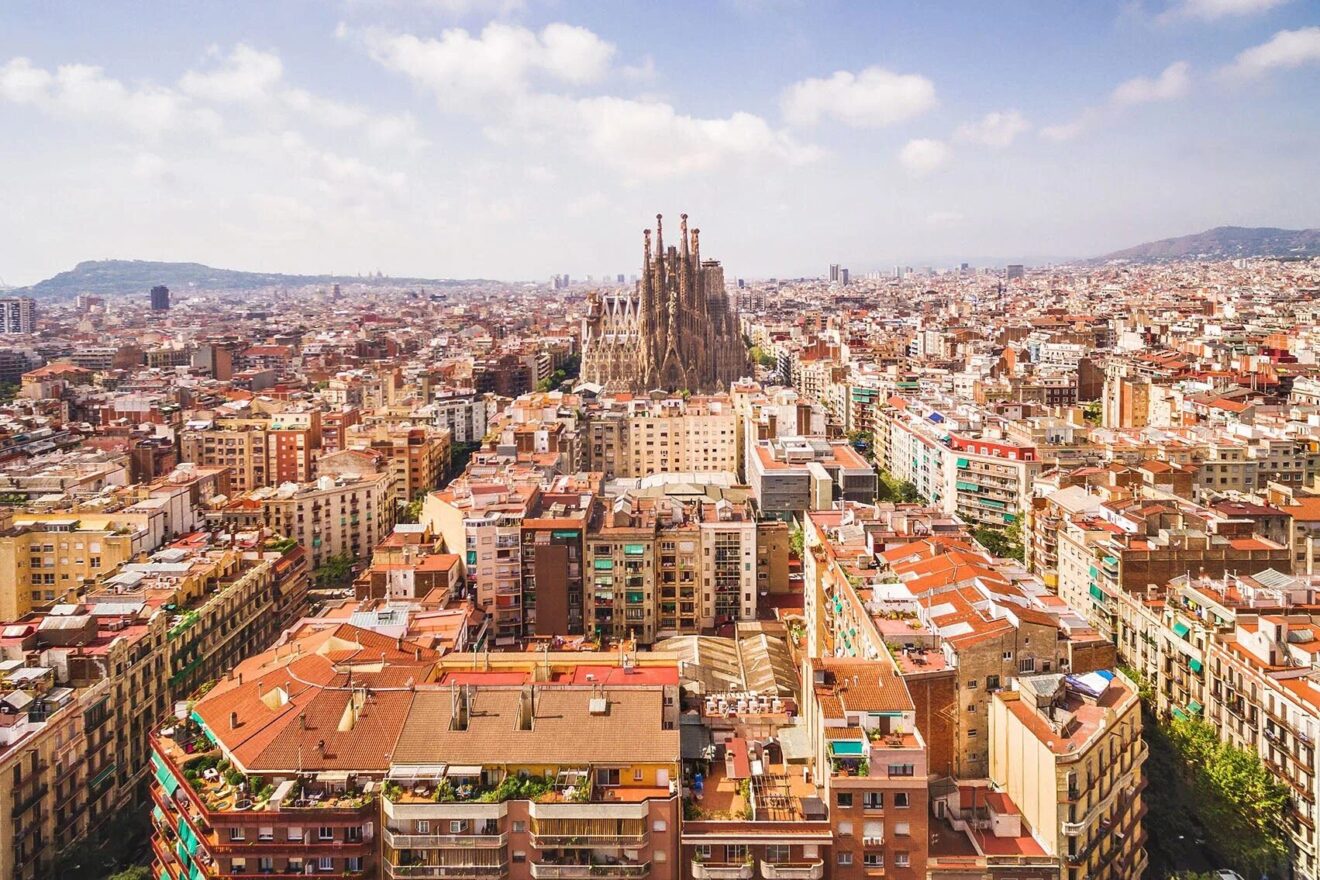
Barcelona, the capital of Catalonia, is chosen every year by thousands of people as their new home. Living in Barcelona offers a unique combination of nature, urban environment and cultural richness. The city is known for blending tradition and modernity: the seafront, mountain scenery, parks and neighbourhoods full of architectural heritage.
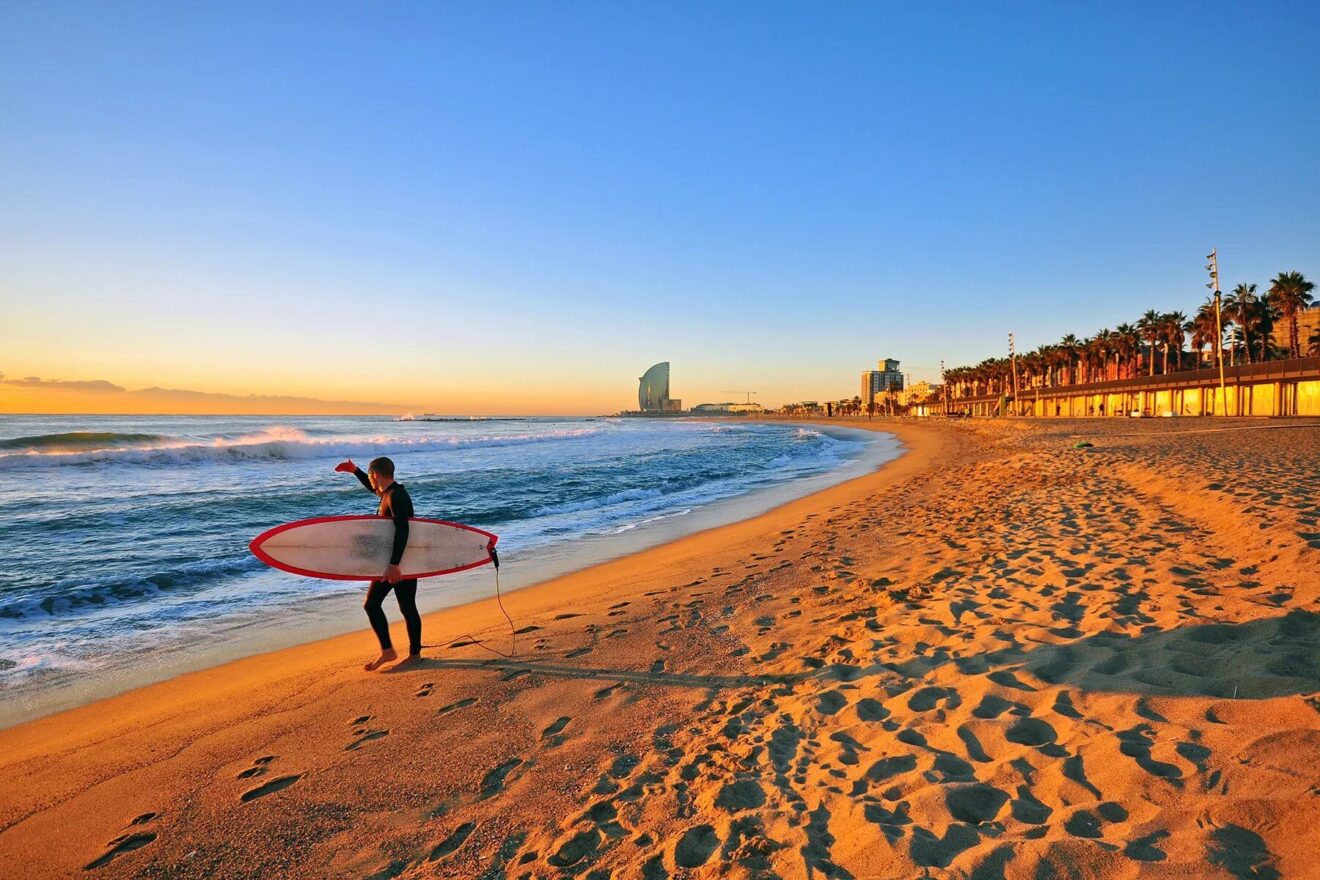
The climate is mild and Mediterranean, with more than 300 sunny days a year and a well-developed public transport system. Transport in Barcelona makes it easy to reach any part of the city and even the wider province of Barcelona. Eixample, Poblenou, Gràcia and Sants are considered among the best districts for a long stay in Spain: they suit students and families with children alike.
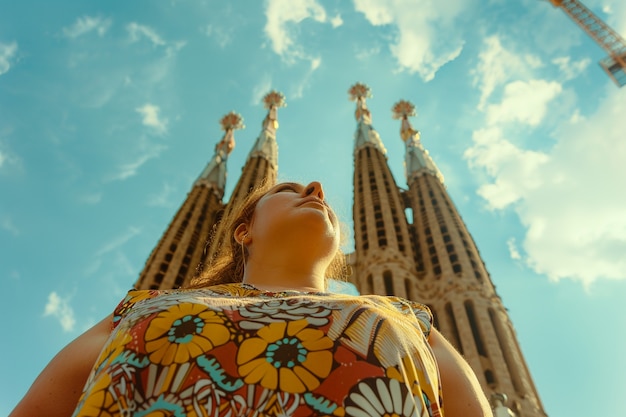
Culture and leisure play a big part in everyday life. There is no shortage of tourist routes, but locals also have plenty to do, from cosy cafés and restaurants to modern museums and exhibitions. In central Barcelona it is easy to find festivals, concerts and food fairs. The Boqueria market and Gaudí’s buildings are especially popular.
Barcelona can lack peace and quiet in high season, but you can always escape to the suburbs or neighbouring regions of Spain. The city makes it easy to do sport, go to yoga, take language courses and make friends through expat communities.
Disadvantages of living in Barcelona
As in any big city, life in Barcelona has its downsides. Rents are high: renting a flat in Barcelona can be hard without a formal contract or proof of income. In some cases landlords ask for several months’ rent up front. You may also need municipal registration and an NIE to sign contracts. For some people the high rents are a reason to look more widely: where the ratio of salaries to housing costs is gentler is covered in our guide to where to live in Spain.
Bureaucracy is another factor. For example, getting a work permit or a doctor’s appointment means dealing with several offices. On top of that, Barcelona keeps to the siesta tradition, and most public offices are open only until 14:00.
Spain is unhurried, so be prepared to be patient. Getting a Spanish visa, renewing a residence permit or processing documents takes time and precision.
Local mentality and adapting as a Russian speaker
Becoming a resident of Spain is not difficult if you understand local traditions. Locals value personal space, openness and calm. In Spain, once people trust you, it is for a long time, but first you have to go through the process of integration.
Russian-speaking immigrants often join online communities to share experience and sort out everyday matters. This makes it easier to adapt and avoid loneliness. Barcelona is a big city, but you will often meet fellow countrymen whom you can quickly get to know and befriend.
Knowing Spanish and at least basic English makes life in Barcelona comfortable. Catalan is valued in the province of Barcelona and in public institutions. You can study the language at free centres for immigrants, which improves your chances of finding work or a place to study.
Overall, being in Barcelona is not only convenient but pleasant. The city quickly feels like home if you approach the move consciously and with an understanding of local realities.

Legal ways to immigrate to Barcelona
There are various programmes for moving to Spain legally. Immigrating to Barcelona requires a legal basis, compliance with the Spanish authorities’ requirements and a complete set of documents. The full list of routes, including those not covered below, is in our overview of Spanish residence permits. It is important to understand that the permit is issued by the Spanish immigration authorities, not by the city: you move to the country, and you can live wherever you choose. How the process works and where to start is covered separately: how to move to Spain. A Spanish visa can be obtained at a consulate outside the country or, where the specific type of residence allows it, from within Spain.
Student visa
One of the most popular and accessible ways to move to Spain is a student visa. You can come to study at a language school, a university or on a master’s programme. A student visa in Spain gives the right to a temporary stay of 6 months to 1 year, with the possibility of renewal. Studying allows you to live in Barcelona and even work up to 20 hours a week.
Work visa and employment
Working in Spain requires authorisation from the immigration authorities. A work visa is issued on the basis of a contract with an employer. Barcelona most often looks for specialists in IT, medicine and tourism, as well as engineers. You can only work in Spain legally with a residence permit. Processing a work visa in Spain can take up to 3 months.
Start-up residence permit
Entrepreneurs and start-up founders can set up a company and apply for a residence permit. Spain has a special regime for entrepreneurs launching projects with high potential. Registering a business allows you to stay in Spain long term and become a Spanish resident. You need to show that the company is viable, provide a business plan and have start-up capital. You must prove that the idea is innovative and of interest to the Spanish market, and create jobs. Before residence is granted, the project and business model are assessed. How this route is processed and what our support includes is described on the Spain start-up visa page.
Digital nomad residence permit
A relevant option for remote specialists and freelancers. This permit is open to people who work for a foreign company or as sole proprietors and earn at least €2,849 a month, which is 200% of the minimum wage; the threshold is revised together with it. With this visa you can stay in Barcelona for up to 5 years, with the option of applying for permanent residence. Just as important, the income must come from outside Spain. What lies behind this status beyond the visa (professions, lifestyle, typical difficulties) is covered in our article on the digital nomad. Requirements, amounts and the application procedure are in our step-by-step guide to the digital nomad residence permit.
Immigrating to Barcelona is not just a choice of location: it is a strategic decision that opens access to Europe, a high quality of life and opportunities for personal growth.
Investor residence permit (“golden visa”): abolished
The programme granted a residence permit for investing at least €500,000 in property and suited those who did not want to live in Spain permanently, as it had no physical presence requirement. Applications stopped being accepted on 3 April 2025, and buying property no longer gives a right to residence. What the programme offered, what happened to permits already issued and what replaces it is explained in our article on Spain’s golden visa.
No lucrativa residence permit (without the right to work)
This permit allows you to live in Spain without working. It suits retirees, remote workers and people with savings. The main condition is a stable income of at least €2,400 a month for a single applicant. Living in Barcelona on this amount is quite realistic, especially if you rent outside central Barcelona, for example in the suburbs.
Family reunification
One of the most humane options. It allows family members of Spanish citizens or residence permit holders to move and obtain legal status. Reunification is possible with a spouse, children or parents if the conditions are met. This route lets you stay in Spain for a long time and obtain permanent residence.
Marriage to a Spanish citizen
Marriage to a Spanish citizen is a basis for a temporary residence permit and then a permanent one. After a year you can apply for permanent residence, and after two for citizenship. You must prove that the relationship is genuine and that you live together. Spanish immigration offices check documents thoroughly.
Residence through arraigo (settlement)
If a person has been in Spain without a visa for three years, they can apply for residence through arraigo (settlement). This route requires integration: knowledge of the language, a signed employment contract, municipal registration and references. The Spanish authorities need to be convinced that the applicant has integrated and can support themselves.
Refugee status
A rare but legally possible route. It requires a threat to life or freedom in the home country. It involves examination of the application, an interview and gathering evidence. You can stay in Spain legally while the application is being considered.
Documents and stages of the move
Moving to Spain begins with preparing documents. To get a Spanish visa successfully, you need to collect the whole set in advance, have the necessary papers translated and apostilled, and plan your application dates. Remember that requirements can differ for each type of residence, but the basic list is common to all.
Documents you need to move
- International passport (valid for at least 1 year);
- Criminal record certificate (with apostille);
- Health insurance valid in Spain;
- Financial documents proving sufficient funds (for example, a bank statement showing at least €2,400 per month of stay);
- Proof of the basis for the residence permit (employment contract, university letter, business plan, etc.);
- Photographs in the required format.
You may also need to register on the Spanish immigration website or book an appointment through a visa centre. For some categories, such as residence through arraigo, you must prove three years of presence in Spain.
Applying for a visa: step by step
- Define the purpose of your move and the right type of residence (for example, a digital nomad visa or a no lucrativa residence permit);
- Prepare your set of documents, including translations and apostilles;
- Book an appointment at the Spanish consulate for your place of residence, or at an application office (if you are applying from within Spain);
- Attend the interview, submit your documents and wait for a decision;
- Receive your Spanish visa and travel to the country;
- On arrival, complete the formalities for temporary residence in Barcelona.
Processing times for documents and visas
Waiting times depend on the type of residence and the country where you apply. On average processing takes 1–3 months. In high season or when applying in popular regions of Spain, it can take longer. Some application types, such as the digital nomad visa, are processed faster.
What to do as soon as you arrive
To stay in Barcelona and its suburbs legally, you need to complete a number of mandatory procedures:
- Get an NIE, the foreigner identification number required for all legal transactions;
- Complete empadronamiento (municipal registration). This is a mandatory step if you want to get a TIE and access local services;
- Open a bank account in Spain. Banks may ask for proof of address and an NIE;
- Take out health insurance (if you have not done so in advance);
- Apply for a TIE, the plastic residence card.
Staying in Barcelona without completing these steps is risky: you may be denied access to public services, education or healthcare.
How much it costs to move to Barcelona: estimated expenses, visas and housing in Spain
Moving to and living in Barcelona is a serious financial decision that needs preparing for in advance. Costs vary considerably depending on the type of visa, how many belongings you bring, the district you live in and how long you stay in Spain. A rough calculation will help you understand how much you need at the start.
Cost of paperwork
The amount depends on the type of Spanish visa and associated expenses:
- Student visa: about €60 application fee; certified translations and apostilles from €150;
- Digital nomad visa: consular fee of about €80; translations and apostilles €200–300;
- No lucrativa: you will need to prove an income of at least €2,400 a month and provide proof of accommodation and insurance.
Also allow for additional payments: the NIE, government fees and the services of a gestor (an agent who helps with paperwork). It is just as important to meet deadlines and make sure every document is correct, otherwise you risk a refusal.
Shipping belongings and logistics
The cost of moving from other countries, such as Russia or other CIS countries, depends on the means of transport. Average costs:
- €800 to €1,500 to ship furniture and personal belongings by road or sea;
- Courier services and excess baggage on a plane: up to €300–400 per suitcase;
- Tickets: €100 to €300 depending on the season.
It is best to compare offers in advance and sign a contract with a reliable company. A well-organised move can save thousands of euros.
Budget for the first month
The first weeks in Barcelona can be financially demanding, especially without a long-term rental. Estimated costs:
- Rent for a one-bedroom flat: €900–1,300 depending on the district;
- Deposit: usually 1–2 months’ rent;
- Utilities: €100–150 a month;
- Groceries: €250–350;
- T-Casual travel card: €11.35 for 10 journeys;
- Phone and internet: €30–50.
The minimum starting budget for one person without children is €2,500 to €3,500. Moving to Spain will cost less if you rent in the suburbs of Barcelona, choose budget mobile operators and make use of discounts.
Finding cheap housing in Barcelona is hard but possible, especially with a long-term rental. Those who choose Barcelona as a place to live are usually people who study the costs in advance and draw up a clear plan.
Budget calculator for moving to Barcelona
Estimate how much you will need at the start, depending on your visa type, length of stay and plans. Below are indicative figures for one person. Depending on family, visa and location, the total can vary considerably.
| Expense item | Minimum (€) | Comfortable (€) | Comment |
|---|---|---|---|
| ✈️ Tickets to Barcelona | 500 | 1000 | Depends on the season and departure city |
| 🧾 Visa + translations + NIE | 250 | 600 | Includes insurance, translations, consular fees, gestor |
| 🏠 1 month’s rent + deposit | 1500 | 2500 | Usually 1–2 months’ deposit + first month in advance |
| 💡 Utilities + internet | 100 | 200 | Electricity, gas, water, internet |
| 🛒 Groceries for a month | 250 | 400 | Depending on diet and shops |
| 🚇 Transport (T-Usual / Casual pass) | 20 | 50 | Depends on how often you travel |
| 📱 Mobile phone | 10 | 30 | Prepaid or contract |
| 🛏️ Small household items (crockery, bedding) | 50 | 150 | Especially if the flat is not fully furnished |
| 📦 Moving logistics (luggage, belongings) | 150 | 500 | If you bring boxes or use a courier |
| 📑 Unexpected expenses | 100 | 300 | A cushion for the first period |
💰 Total:
- On a budget: from €3,000–3,500
- Comfortably: from €5,000–6,000
A separate expense is what you left at home. Large furniture and appliances are usually easier to buy locally, while personal belongings are sent on by post or courier: how much a parcel from Russia to Spain costs and how long it takes.
Housing in Barcelona: buying and renting
Districts popular with foreigners
Life in Barcelona often starts with choosing the right district, and your comfort for many months often depends on it. The following neighbourhoods are especially popular:
- Eixample: one of the most recognisable districts, with straight streets, modernista architecture and quick access to the centre.
- Poblenou attracts those who want to live in Barcelona close to the sea but a little away from the tourist bustle. Start-up spaces and coworkings are growing fast here.
- Gràcia: a cosy area with the feel of a small town, even though it is right inside Barcelona. A pleasant place for those who want to live in Barcelona like a local rather than a tourist.
- Sants: a district next to the city’s main transport hub. Convenient for those who plan to travel often outside Barcelona, around the province or to other regions of Spain.
Many foreigners choose Barcelona for a long-term stay precisely because it has everything they need: the sea, transport, leisure, schools, healthcare, and a European standard of living.
Rental and purchase prices in Barcelona
According to idealista, the average rent in Barcelona in June 2026 was €23.0 per m² per month, or about €1,610 for a 70 m² flat; the actual price depends heavily on the district and the condition of the property. In central Barcelona a one-bedroom flat will cost €2,500–2,700, and in quieter neighbourhoods from €1,500 a month. In addition to the first month, the law requires a deposit of one month’s rent and, if the landlord asks, an additional guarantee of no more than two months’ rent.
The price of buying a flat in Spain also varies:
- City average: €5,440 per m² in August 2026 (idealista)
- In prestigious areas (Sarrià-Sant Gervasi or parts of Eixample): from €6,000–8,000 and above
- In the suburbs of Barcelona you can find housing from €2,400 per m²
Given these prices, however much the move to Barcelona costs, it requires careful financial preparation.
Useful websites and estate agencies
You can find suitable housing on established platforms:
- Idealista
- Fotocasa
- Habitaclia
- Badi: for finding rooms and flatmates
If you are moving to Spain from Russia and do not speak Spanish, it is better to use agencies that offer a package of services in Russian. Some of them work with Russian clients remotely, giving advice by email, preparing documents and helping to sign a rental or purchase contract.
Bear in mind that when renting through an agency in Spain, a commission equal to one month’s rent is almost always charged. You will also need to provide documents proving your financial means, especially if you are not yet officially working in Spain.

Everyday life in Barcelona
Public and private transport
Transport in Barcelona is considered one of the best in Spain. The metro runs from 5:00 to midnight, until 2:00 on Fridays and around the clock on Saturdays. Timetables are easy to follow in mobile apps. The network covers central Barcelona and the suburbs. There are also FGC and RENFE trains, a bus network and trams.
For short trips the T-Casual or T-Usual cards are good value. Within Spain and the province of Barcelona it is convenient to travel by train or by ALSA coach. Barcelona also has the Bicing bike-sharing scheme, e-scooter services and car sharing.
If you plan to have your own car, you will need an EU driving licence or to exchange your licence, as well as a permanent parking space, which is a rarity in the city centre. Spanish residents have special parking zones with permits.
Healthcare and health insurance
You can only become a Spanish resident if you have health insurance. It is required both for a visa and for treatment in public and private clinics.
The public system (CatSalut) is free and reliable, but there can be waiting lists. Private providers (Adeslas, Sanitas, Asisa) offer care without waiting. Insurance must cover your stay in Spain for the whole period and be taken out in advance. It costs €30 to €80 a month.
The education system in Barcelona
Education in Spain is compulsory for children and available to foreigners. Barcelona has state, private and international schools. State schools teach in Spanish and Catalan. International schools teach in English and cost €500 to €1,500 a month.
University students in Spain can take master’s programmes in English. Universitat de Barcelona, Universitat Pompeu Fabra and UAB are among Europe’s top universities. Studying in Spain can be fee-paying or partly subsidised.
Job opportunities for foreigners
You can only work in Spain with authorisation. IT specialists, teachers, marketers, designers and medical staff are in demand. There are many vacancies in tourism, logistics and services. Job search platforms in Spain: InfoJobs, Indeed, Job Today, LinkedIn.
Unemployment in Spain remains high, so it is important to assess your chances in advance and prepare a competitive CV. You should also check that your visa gives you the right to work.
How to start your own business
Spain has a simplified business registration procedure for foreigners. You will need an NIE, a bank account and a registered address. You can register as an autónomo (self-employed) in 1–2 weeks, and set up an SL (a limited liability company) in about a month.
It is advisable to use a gestor who will help you file the documents. A business gives you a legal basis to stay in Spain and to apply for renewal of your residence permit.
Taxation
Individuals pay income tax (IRPF) at 19% to 47% depending on their earnings. There are also taxes on property (IBI), vehicles, rental income, and social security contributions.
Residents of Spain need to take their worldwide income into account: if you spend more than 183 days a year in the country, you are considered tax resident.
Social security
The Spanish social system includes pensions, unemployment benefits, maternity and paternity pay, and family allowances. To receive benefits you must work officially and pay contributions into the Seguridad Social system. In Spain it is important to have an employment contract or be a registered entrepreneur.
Food and grocery prices
Life in Spain means good-quality, affordable food. A grocery basket for one person in Barcelona costs €200 to €350 a month. Prices depend on the shop:
- Mercadona: good-value prices;
- Carrefour and Bonpreu: a good selection;
- Lidl: the cheapest groceries.
At markets such as Mercat de Sant Antoni you can buy fish, seafood, meat and cheese. You can keep your budget down by using discounts, apps and buying in bulk.
Leisure and entertainment
Barcelona can lack calm in high season, but this is offset by an abundance of events. Throughout the year there are music festivals, free exhibitions and food events. The city offers theatres, cinemas, bars, beaches, the Ciutadella and Montjuïc parks, and trips to other Spanish cities.
Children have clubs, sports sections, the zoo and the Tibidabo amusement park. At weekends many people head to Sitges, Montserrat or Tarragona: by local train you can be out of Barcelona in just an hour.
Living comfortably in Barcelona is possible if you plan your budget in advance, follow the law and make full use of the city’s infrastructure.
Infrastructure:
- Transport in Barcelona covers every district of the city;
- Healthcare: public and private, with good medical centres;
- Schools: in Spanish, Catalan and English;
- Restaurants, cafés, pharmacies and supermarkets on every corner;
- Beaches and parks for relaxing.
Life in Spain is characterised by an unhurried pace, the siesta and attention to quality of life. Unemployment in Spain remains above the EU average, but there are vacancies.
Adapting to Barcelona: tips for newcomers, mistakes and useful steps
Why learning Spanish and Catalan matters
Knowing Spanish makes everyday life and dealing with public bodies much easier. Catalan is especially important for those who plan to study or work in public institutions. Language schools such as BCN Languages or Don Quijote offer courses for all levels.
Russian-speaking communities in Barcelona
Barcelona has active Russian-speaking groups and forums. Telegram channels, Facebook groups and local meet-ups are popular places to make friends and get advice and help. There are also cultural clubs, language exchanges and interest groups.
How locals treat Russian-speaking migrants
On the whole locals are friendly and curious, especially when you show respect for the local culture and language. Openness, willingness to talk and modest behaviour make it easier to integrate into the community.
Typical adaptation mistakes and how to avoid them
- Ignoring the local language and culture
- Isolating yourself in a “Russian bubble”
- Expecting everything to work as it does at home
- Underestimating the bureaucracy
How to get an NIE and register your address
How to get an NIE (foreigner identification number)
An NIE is needed to sign contracts, open a bank account and apply for a residence permit. You can book an appointment online through the Sede Electrónica website or apply at a consulate before you come to Spain. In Spain it is issued by the police by appointment.
Municipal registration (empadronamiento)
If you plan to live in Barcelona for a long time, it is important to start by getting an NIE, the foreigner identification number, and completing municipal registration (empadronamiento). It is done at the town hall (Ajuntament) and is required almost everywhere, from taking out health insurance to applying for a residence permit in Spain. Empadronamiento in Barcelona is compulsory even if you have rented a place temporarily. The registration has no expiry date, but it is worth renewing every two years, especially during a long stay in Spain.
Note: if you live in Barcelona but are not registered, it can cause problems when renewing your visa, submitting documents at the Spanish embassy or even receiving parcels from delivery services.
Opening a bank account in Barcelona
Opening a bank account in Spain is one of the first tasks after the move. Without an account you cannot rent a flat with direct debit, get internet connected, buy a gym membership or simply live with European convenience, especially if you plan to stay here for a long time.
What documents will you need?
Residents (those who already have an NIE and municipal registration) will need to provide:
- A passport or international passport
- NIE (foreigner identification number)
- Proof of address (rental contract or empadronamiento)
- In some cases, a document proving the source of income (for example, an employment contract, tax return or letter from an employer)
If you are not yet resident but want to move there, you can open a non-resident account, but its functions are limited.
Banks popular with foreigners
| Bank | Features |
|---|---|
| CaixaBank | One of the largest banks, many branches |
| BBVA | Convenient mobile app, support in English |
| Banco Sabadell | Often accommodating to foreigners, quick onboarding |
| Bankinter | Suits entrepreneurs and digital nomads |
| N26 (online) | Fully online, fast KYC, no NIE required |
| Revolut (online) | Great at the start, but no substitute for a full account |
In Barcelona a lot depends on the bank, on where you live, your status in Spain and whether you have a contract. Some banks will open an account in 15 minutes; others will ask for a pile of paperwork.
How the procedure works
- You go to a branch or apply online (if the bank supports it).
- You show your documents and fill in a form.
- You sign the contract and receive an IBAN, a card and access to online banking.
- A few days later your debit card arrives (or straight away, if you are lucky).
Worth knowing: even once the account is open, it can be temporarily frozen if you do not provide additional information, especially when money arrives from abroad. This is standard KYC practice.
Costs and fees
In real life the Spanish banking system can be… temperamental. Keep in mind:
- Many banks charge a monthly fee (€6 to €15) if there is no minimum balance or salary paid into the account.
- Free accounts are more common with online banks.
- International transfers are charged separately (usually 0.4–1%).
Tip: you need to update your details with the bank if you change your address or passport, otherwise you may have trouble accessing your money.
Online banks: convenient at the start
If you have only just arrived in Barcelona and do not yet have all your documents, use online services:
- N26: open an account in 10 minutes, managed entirely through the app.
- Revolut: suitable for payments and holding euros, but not for rent or subscriptions.
- Wise: convenient for international transfers and multi-currency operations.
This will help you get on with life straight away without unnecessary bureaucracy, especially in the first weeks.
Tips from people who have moved
- Bring paper copies of all your documents, even if you are applying online.
- It is best to go to the branch in the morning: shorter queues and a better chance of getting an English-speaking employee.
- Some banks require the NIE in plastic form (TIE) rather than as a paper certificate, so be prepared for this.
- The payment card arrives by post, so do not forget to put your name on your letterbox.
- If a bank refuses without explanation, do not be upset. In Spain this is common practice. Just go to another one.
Opening a bank account is a step without which settling into everyday life cannot begin.
You need it for rent, for your phone, for legal employment and even for access to Europe’s digital services.
Do it as early as possible, and your stay in Barcelona will be much calmer.
Setting up internet and mobile phone
When you first arrive in Barcelona, staying connected becomes a priority. Without stable internet and a decent mobile plan you cannot work, handle paperwork, order a taxi or receive SMS codes. This is especially important if you have come as a remote worker or want to quickly “plug into” the city’s digital infrastructure.
What documents will be required?
To set up home internet or a mobile plan, you will need:
- NIE (foreigner identification number);
- Passport;
- Proof of address (rental contract);
- A Spanish bank account (for direct debits).
Yes, even a mobile SIM card in Spain requires identification. This is due to local data protection law.
Popular internet providers
Internet in Barcelona is well developed, especially in central districts. Fibre can be installed even in old buildings. Below are the most reliable providers:
| Provider | Speed | Price / month | Comment |
|---|---|---|---|
| Movistar | up to 1 Gbit/s | from €40–55 | The most stable, but expensive |
| Orange | up to 1 Gbit/s | from €35–50 | Frequent discounts |
| Vodafone | up to 600 Mbit/s | from €30–45 | Good for city internet |
| Lowi | up to 300–600 Mbit/s | from €25 | Budget option, but not available everywhere |
| Pepephone | up to 600 Mbit/s | from €29–35 | Online sign-up, good support |
There are lots of offers such as “3 months free” or “discount for signing up online”. As a rule, however, the contract is for at least 12 months.
Mobile phone: what to look out for
Mobile coverage in Barcelona is stable, and 4G works even in the metro. 5G is available, but not everywhere.
Budget and popular operators:
- Simyo: flexible plans; you can build your own package.
- Lowi: inexpensive, runs on Vodafone’s infrastructure.
- Yoigo: good plans with data and minutes across the EU.
- Digi Mobil: an ultra-budget option, especially if you often call CIS countries.
- Orange and Movistar: reliable, but more expensive.
Package prices:
- 10–20 GB of data + minutes: €10 to €20 / month
- Unlimited: from €25 / month
- Prepaid SIMs: from €5, activated the same day
Prepaid SIMs: convenient at the start
If you have just arrived and do not yet have an NIE or bank account, start with a prepaid SIM card. You can buy one in a shop or supermarket.
These cards do not require a contract and work straight away.
This is convenient while you are sorting out your documents, looking for housing and deciding where you will live.
Tips and advice
- Worth knowing: when you change address, the provider cannot always transfer your contract, and you may need a new one.
- Almost all providers include a router with home installation in the price. In large buildings, check in advance whether it can be placed near the central socket.
- Check coverage in your area: in Barcelona speed depends on whether you live in the centre, on a hill or in a new development.
- Renew or cancel contracts in good time: the penalty for early termination can be up to €100.
- Some banks and insurers offer a bonus if you sign up for internet through them, which is useful at the start.
Getting connected is one of the first practical steps after the move, and your comfort in the first weeks depends on it. It is best to sort it out straight away: you will avoid unnecessary stress and settle into real life in Barcelona quickly.
Real stories of moving to Barcelona: migrants’ experiences and reviews
Alexander, 34, IT specialist
I have now been living in Barcelona for three years. I moved on a digital nomad visa. Before that I worked remotely from Tbilisi and Bangkok, but Barcelona became truly “home”: stable infrastructure, the sea 10 minutes away, peace and quiet in Poblenou and coworkings within walking distance.
The move gave me the feeling that you can live without burning out. I went through all the stages with a gestor; all I had to do was gather the documents and wait for my NIE. Now I am applying for a longer-term residence permit in Spain.
Ekaterina, 28, master’s student
When I arrived in Barcelona, I immediately felt I could be myself here. I enrolled at Universitat de Barcelona and live in Gràcia: calm, safe, beautiful. I found my flat through Idealista; the flat hunt was hard, but something turned up.
There is none of the rush you get in Moscow. City life here is about quiet and balance. Studying is interesting, and I am gradually getting to grips with the language. The environment helps a lot: there is plenty of social life, and the university has students from all over the world.
Irina and Pavel, a couple with a child
We planned our move to Barcelona for a long time. We decided to apply for a no lucrativa visa. We proved our income, took out insurance, rented a flat, and everything worked out. It took patience, but we managed.
Now we live in Barcelona, in Sarrià: schools, parks, quiet. Our child adapted quickly, and we are learning Catalan. Sometimes we go to the suburbs or the coast, or travel. There is more real life here than in Russia. And we are happy that we stayed here.
Dmitry, 42, entrepreneur
I moved on a business visa and registered as self-employed. In Barcelona a lot depends on connections and understanding the process. Initiative is respected here, but you need to know how to do business by local rules.
What I like is that there is no overload and less stress. We go to bars and do sport; life is freer. Yes, in Spain bureaucracy slows things down, but everything can be solved.
Alena, UX designer, freelancer
I want to stay here. I came as a tourist and stayed on a digital nomad permit. I rented a studio in Poble-sec. I work for clients in the US. Housing in Spain is expensive, but you can find reasonable options if you look outside the centre.
Getting my Spanish NIE took two weeks, and then everything went smoothly. I have to renew my visa every year, but so far everything is stable.
What surprised me was the attitude of the locals: they are kind, calm, never in a hurry, and if you become friends, it is for ever.
Tips from those who have already moved to Barcelona
Moving is only the beginning. The real test comes later, when the initial excitement fades but everyday chores and paperwork remain. This is the stage when many people feel lost, especially if they came alone. But there is no need to fear real life: Barcelona has plenty of tools, communities and tips to make adapting smooth.
Learning Spanish and Catalan
Even if you moved as a digital nomad or freelancer, you need to know at least basic Spanish. You need it for:
- dealing with officials;
- signing contracts;
- going to the pharmacy or a clinic;
- integrating into local social life.
In addition, in Spain, for example, Catalan is widely used in public institutions and schools in Catalonia. It is not compulsory, but knowing even a couple of phrases is a gesture of respect that locals appreciate.
Where to learn the language:
- Free courses for migrants from the Generalitat de Catalunya;
- Language schools (BCN Languages, Don Quijote);
- Language exchanges (intercambio);
- Online platforms: Italki, Baselang, Duolingo.
How to get an NIE and register your address
You will need to complete a basic bureaucratic quest.
Here is what to do first:
- Get an NIE, the foreigner identification number. Without it you cannot:
- rent housing;
- open an account;
- sign an employment contract;
- take out insurance;
- get a residence permit in Spain.
- Empadronamiento: municipal registration.
Even if you are living in a short-term rental, you still need to do this registration. Without it you will have no access to schools, healthcare or social services. - TIE (residence card): a plastic document obtained after entry and after the NIE. It confirms your status and is needed for stays longer than 6 months.
Integration tips
- Coming to Barcelona? Join local Telegram groups of Russian- and English-speaking expats straight away.
This helps you:- find housing;
- ask questions;
- feel like “one of the locals” sooner.
- Looking for housing? Take a look around first and do not rush into long-term contracts. It is better to stay in an Airbnb or similar for a month and work out on the spot which district suits you.
- Keep life simple. This is respected here: nobody looks at your watch, shoes or salary. The main thing is to be open, respectful and friendly.
- You will stay here comfortably if you do not resist the cultural code: “mañana”, the siesta, the unhurried pace are not laziness but a philosophy.
- Renew your documents on time, especially if you are on a student or digital nomad visa. Miss the deadline by a day and you may have to go through everything from scratch.

Common mistakes relocators make when adapting
Here is what most often gets in the way:
- Ignoring the language.
Even a simple phrase like “Buenos días” opens doors. - Shutting yourself in a “Russian bubble”.
A community matters for adapting, but you should not limit your circle to people from your own country. - Expecting it to be “just like home”.
No, real life here has its own rules. And that is the charm of it. - Underestimating the bureaucracy.
Yes, in Spain, for example, a certificate can take a month. Patience and a smile are your allies.
Small tips from people who have moved
- Always keep copies of all your documents on paper and electronically.
In Spain this is standard: you may be asked for a copy of your NIE even when you show the original. - Make acquaintances at supermarkets, yoga studios and coworkings.
There is plenty of social life in Barcelona, and it helps with everyday matters. - Do not be afraid to ask questions, even in broken Spanish.
Friendliness matters more than grammar here. - Buy a T-Usual travel card if you plan to travel a lot: it is better value than the T-Casual.
- Set up your banking app and internet in Barcelona in advance: it is the key to peace of mind.
Frequently asked questions about moving to Barcelona (FAQ)
Can you move without speaking the language?
Yes, but even basic Spanish makes life easier. In Spain most documents are processed in Spanish or Catalan. The language will help you find work in Barcelona, communicate with its residents and adapt faster.
What is the average salary in Barcelona?
The average salary in Barcelona is €1,800–2,200 a month gross. In IT, marketing and engineering it is €2,500–4,000 and above. Salaries in Spain vary by region and profession. The cost of living here is lower than in Paris but higher than in Valencia.
What should families with children consider?
Choose districts with good schools and infrastructure. Barcelona has state and international schools. Living in Spain with children involves a period of adaptation, but schools often help with integration.
How much does housing in Barcelona cost?
You can rent a flat in Barcelona for €800 to €1,500 a month. Districts such as Sants, Poble-sec or Nou Barris are cheaper. The cost of housing depends on floor area, floor level and district. On average it is €1,000–1,200 a month.
Conclusion: is it worth moving to Barcelona and how to start preparing
Moving to Barcelona is not only a logistical and legal process but also an inner adventure. The city combines:
- convenient infrastructure
- a comfortable climate
- the sea, food and culture
- career and personal opportunities
Yes, you will have to go through bureaucracy and everyday difficulties, and you may come up against unfamiliar rules, landlords who ask for a six-month deposit, or banks where you have to explain every detail.
But the result is worth it.
Do not be afraid to start from scratch. Ask questions, look for support, use the resources available and remember: the very fact that you are reading this article means you have taken the first step.

- How to move to Barcelona: the complete guide
- Why Barcelona in particular
- Legal ways to immigrate to Barcelona
- Student visa
- Work visa and employment
- Start-up residence permit
- Digital nomad residence permit
- Investor residence permit (“golden visa”): abolished
- No lucrativa residence permit (without the right to work)
- Family reunification
- Marriage to a Spanish citizen
- Residence through arraigo (settlement)
- Refugee status
- Documents and stages of the move
- How much it costs to move to Barcelona: estimated expenses, visas and housing in Spain
- Housing in Barcelona: buying and renting
- Everyday life in Barcelona
- Adapting to Barcelona: tips for newcomers, mistakes and useful steps
- How to get an NIE and register your address
- How to get an NIE (foreigner identification number)
- Municipal registration (empadronamiento)
- Opening a bank account in Barcelona
- What documents will you need?
- Banks popular with foreigners
- How the procedure works
- Costs and fees
- Online banks: convenient at the start
- Tips from people who have moved
- Setting up internet and mobile phone
- What documents will be required?
- Popular internet providers
- Mobile phone: what to look out for
- Prepaid SIMs: convenient at the start
- Tips and advice
- Real stories of moving to Barcelona: migrants’ experiences and reviews
- Alexander, 34, IT specialist
- Ekaterina, 28, master’s student
- Irina and Pavel, a couple with a child
- Dmitry, 42, entrepreneur
- Alena, UX designer, freelancer
- Tips from those who have already moved to Barcelona
- Learning Spanish and Catalan
- How to get an NIE and register your address
- Integration tips
- Common mistakes relocators make when adapting
- Small tips from people who have moved
- Frequently asked questions about moving to Barcelona (FAQ)
- Conclusion: is it worth moving to Barcelona and how to start preparing