Key facts about buying land in Spain
Spain remains one of the most attractive countries in Europe for buying property and plots of land. Buying land in Spain is open to residents and foreigners alike without significant restrictions. This makes the country an ideal place to build your own home, develop a business or invest in real estate. If building from scratch is not part of your plans, compare the costs and timelines with buying a ready-made home — this is covered in our guide on how to buy a house in Spain.
In this article we look in detail at every aspect of buying a plot of land in Spain: from choosing the right type of land to preparing the documents and obtaining building permits. It is important to understand the specifics of Spanish legislation and regulations in order to avoid mistakes and successfully realise your dream of private property in this sunny country.
Types of land plots in Spain: what you need to know
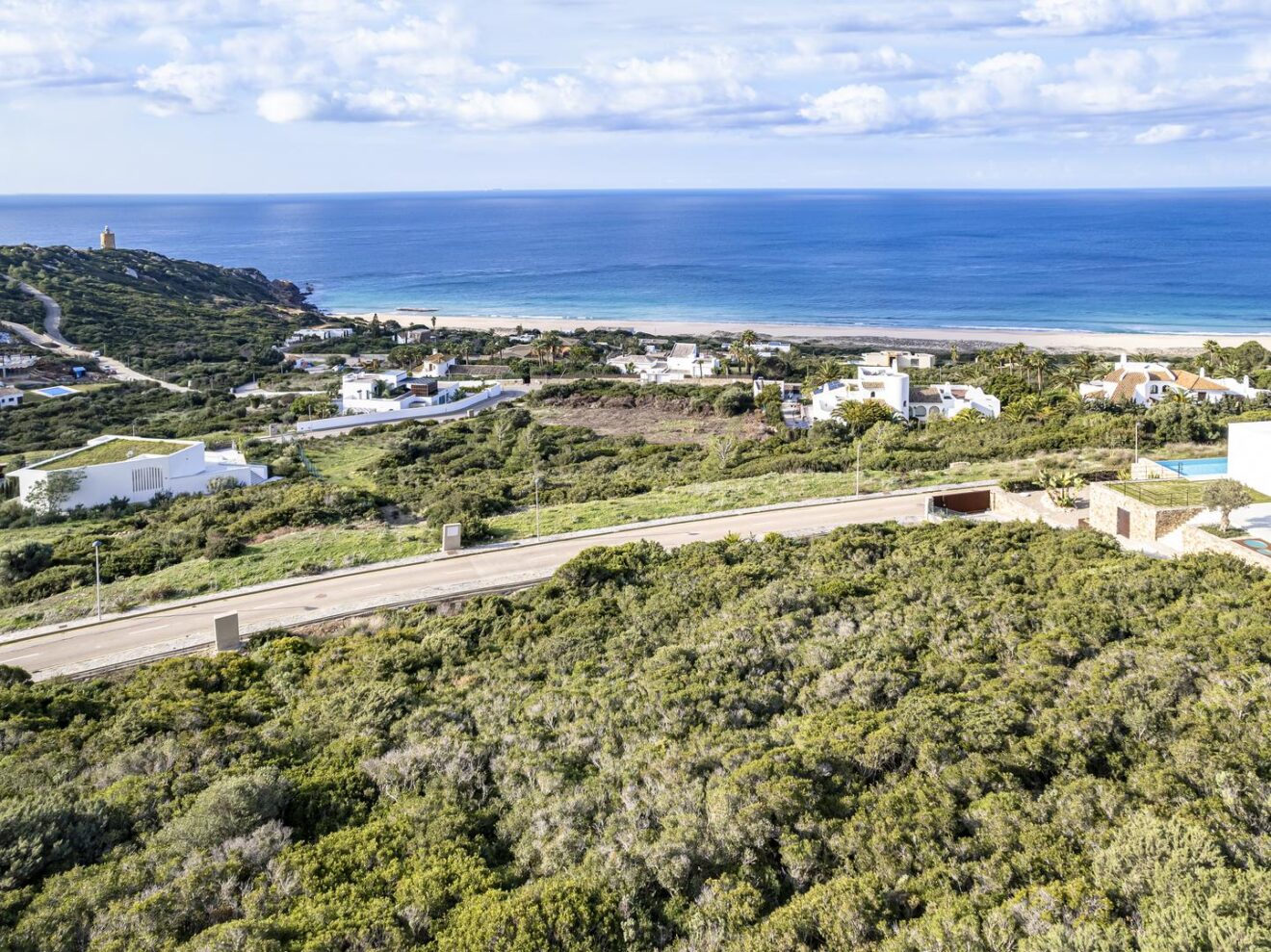
Before buying land in Spain, you need to understand how land is classified. Before the purchase it is important to establish the land’s category clearly, as this directly affects whether you can build and what the land can be used for. Spanish law divides all land into several categories, each with its own features and restrictions on use.
Main land categories
1. Suelo Urbano (urban land)
This is building land that is fully suitable for residential and commercial construction. A plot of urbano category for building a house must be connected to all the main utilities: electricity, water, sewerage and roads. In these areas you may build houses, flats, villas and other buildings in line with the municipality’s urban plan. A typical plot of 500 to 2,000 square metres in an urban area is ideal for private construction.
2. Suelo Urbanizable (land for development)
This category covers land that the municipality plans to develop in the future. Urbanizable plots can become suitable for building once the necessary utility connection works are done and the relevant permits are obtained. Bear in mind that transforming such land can take several years.
3. Suelo Rústico/Rustico (agricultural land)
Agricultural land is intended for farming, growing crops or keeping animals. This is where stables are kept, and looking after horses in Spain is a recognised profession with its own name and terms of employment: details in our article on working as a groom. On rustico plots building houses is generally prohibited or heavily restricted. In some regions of Spain you can build a small house on rural land under strict conditions, for example if the plot exceeds 10,000 square metres.

Special zones
Besides the main categories, there is land with special status:
- Protected areas — forests, parks, archaeologically significant sites, the coastline (where strict restrictions apply)
- Green zones — intended for public use
- Historic town centres — with additional building requirements
Foreigners’ rights to buy land in Spain
One of the main advantages of the Spanish property market is that foreigners have the right to buy land and property on an equal footing with the country’s citizens. Citizens of Russia, Ukraine and other countries can freely buy a plot of land in any region of Spain. Selling plots to foreign buyers is common practice on the Spanish market.
What buying land gives a foreigner
- Full ownership — the owner has the same rights as Spanish citizens
- The option to build — provided the law is followed and the necessary permits are obtained
- Golden visa — the programme was abolished on 3 April 2025: buying property or land, for any amount, no longer gives the right to a residence permit
- An investment asset — Spanish land in popular regions is rising in value
Documents foreigners need
To buy a plot in Spain, a foreigner needs:
- NIE (Número de Identificación de Extranjero) — the foreigner’s identification number, mandatory for any property transaction
- A Spanish bank account — for financial transactions
- A valid international passport — for identification

Popular regions for buying land
The choice of area depends on the purpose of the purchase: building a villa, business, investment or permanent residence. Plots sell most actively in the following regions.
Costa del Sol
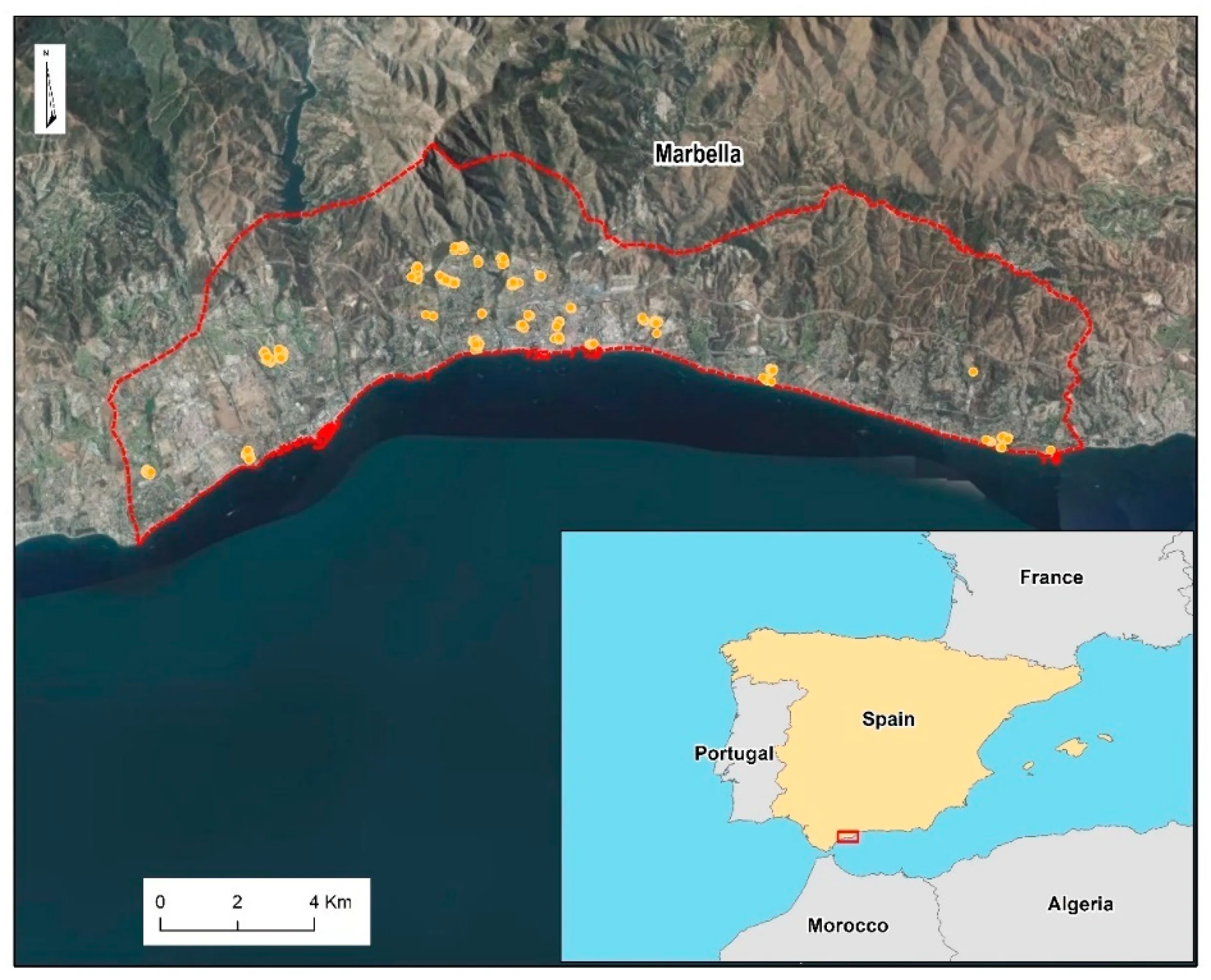
Spain’s southern coast is the most popular region among investors and buyers from Russia. It is home to the prestigious towns of Marbella, Málaga and Benalmádena. The Costa del Sol attracts people with year-round sunshine, well-developed infrastructure and proximity to the sea.
Costa Blanca
This region in the east of the country includes towns such as Alicante, Torrevieja and Benidorm. The Costa Blanca has more affordable prices than the southern coast while offering an excellent quality of life.
Catalonia and Barcelona
Spain’s north-eastern region, including Barcelona and the Costa Brava, attracts buyers with its rich culture, history and proximity to the French border. Land here is more expensive, but demand remains consistently high.
Valencia
Spain’s third-largest city and the surrounding area offer a balance between city life and the coast. It is popular with those looking for a calmer atmosphere.
Andalusia
The southernmost part of the country, with a rich historical heritage. Besides the coastal areas, you can find rural plots here at attractive prices.
The Canary Islands
The Canary Islands deserve a separate mention — an ideal place for year-round living with a unique climate and tax incentives.
How to buy land: step-by-step guide
Buying a plot of land in Spain requires a careful approach and following a set procedure. Let us go through the process step by step.
Step 1: Setting goals and finding a plot
Before buying land it is important to define:
- The purpose of the purchase (building a house, business, investment)
- The budget (including additional costs)
- The preferred region and location
- The plot size you need
- Availability of utilities
You can look for a suitable plot through:
- Estate agencies
- Specialised portals and websites
- Private listings
- Recommendations from local residents
Step 2: Getting an NIE
The foreigner’s identification number (NIE) is the first mandatory document. You can get it:
- At the Spanish consulate in your country
- Directly in Spain at a police station or the foreigners’ office
To get an NIE you need to fill in an application (form EX-15) and provide your passport and documents showing the reason for the request (for example, an agreement of intent to buy property).
Step 3: Opening a bank account
A Spanish bank account is needed to:
- Pay for the purchase
- Pay taxes
- Pay for the notary’s and lawyer’s services
- Pay utility bills afterwards
To open an account you will need your passport, NIE and proof of address.
Step 4: Checking the plot’s legal status
A critically important stage! Be sure to check:
The land cadastre (Catastro)
- The plot’s cadastral reference
- Exact characteristics: area, boundaries, designated use
- Whether the actual state matches the cadastre data
The Land Registry (Registro de la Propiedad)
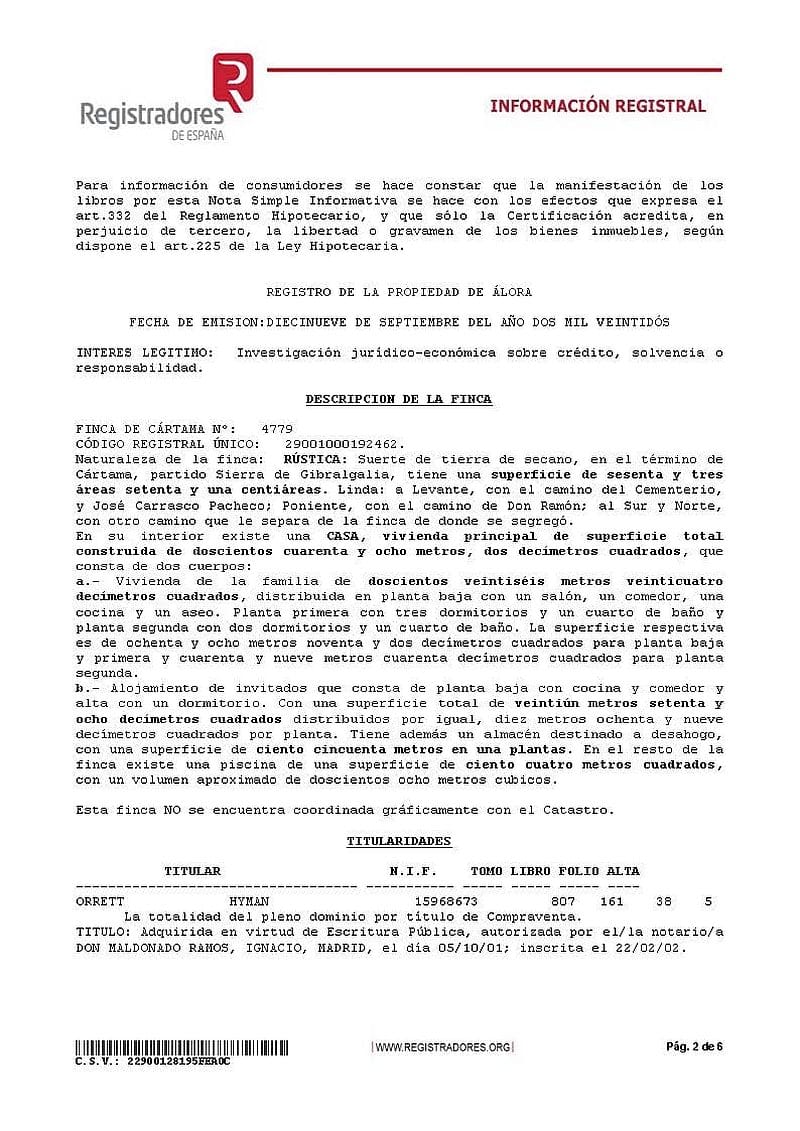
A check in the property register is mandatory to confirm:
- The current owner
- Any encumbrances, debts or mortgages
- Litigation
- Easements (third-party rights to use the land)
Nota Simple — an extract from the register containing all the legal information about the property. You can get it online or at the registry office.
The urban plan (Plan General de Ordenación Urbana)
- Land category
- Permitted use
- Building restrictions
- Future development plans for the area
It is strongly recommended to hire a lawyer or property specialist for a thorough check.
Step 5: The preliminary contract
Once a plot has been chosen, the parties sign a preliminary agreement (Contrato de Arras). The buyer pays a deposit, usually 10% of the price. This contract fixes the parties’ intentions and the terms of the deal.
Important: If the buyer withdraws from the deal, they lose the deposit. If the seller withdraws, they must return double the deposit.
Step 6: Signing the deed at the notary
The main transaction is completed before a notary (notario). The notary checks: Whom to choose and what an appointment costs is shown using the example of notaries in Valencia.
- The identities of the parties
- The legal soundness of the transaction
- Payment of all taxes
- The correctness of the documents
After signing the sale and purchase agreement the buyer receives the Escritura Pública (public deed) — the main document confirming private ownership.
Step 7: Paying the taxes
When buying land you must pay:
- ITP (Impuesto de Transmisiones Patrimoniales) — property transfer tax for resale properties (6–10% depending on the region)
- IVA (VAT) — 21% for plots in new developments
- IAJD (Impuesto de Actos Jurídicos Documentados) — stamp duty on legal documents (0.5–1.5%)
The land tax must be paid within 30 days of signing the deed.
Step 8: Registration in the Land Registry
The final step is registering the transaction in the Land Registry (Registro de la Propiedad). This gives full legal protection to your rights as owner. Registration in the property register usually takes a few weeks and is mandatory to fully secure your rights to Spanish land.
Taxes and costs when buying land
It is important to account in advance for all the additional costs, which add up to a substantial share of the purchase price.
Table of the main taxes and costs
| Type of cost | Rate/Amount | Note |
|---|---|---|
| ITP (transfer tax) | 6-10% | For resale plots, depends on the region |
| VAT (IVA) | 21% | For new plots from developers |
| IAJD | 0.5-1.5% | Stamp duty, depends on the region |
| Notary’s services | 0.5-1% | Of the property’s value |
| Registration in the registry | 0.5-1% | State fee |
| Lawyer’s services | 1-2% | Legal support for the transaction |
| Agency services | 3-5% | Usually paid by the seller |
| Translation of documents | EUR 200-500 | If required |
| Getting an NIE | EUR 10-15 | State fee |
| Opening a bank account | EUR 0-100 | Free at some banks |
Additional costs total 10% to 15% of the plot’s price.
Annual taxes after the purchase
After acquiring land, the owner must pay every year: How these payments are calculated and when they are due is set out in detail in our article on property taxes in Spain.
- IBI (Impuesto sobre Bienes Inmuebles) — the municipal land tax (0.4–1.3% of the cadastral value)
- Wealth tax — if the value of all your property exceeds a certain threshold (usually EUR 700,000)
- Imputed income tax — for non-residents who own property in Spain (about 2% of the cadastral value)
Building on a plot of land
Buying building land is often the first step towards creating your dream home in Spain. Here is what you need to know about the construction process.
Building permits
To start building in Spain, you need a licence (Licencia de Obra) from the local municipality. The permit procedure includes:
1. Designing the project You need to hire a licensed architect, who will prepare:
- The building project (Proyecto Básico and Proyecto de Ejecución)
- Technical specifications
- A safety plan
- An environmental impact assessment
2. Approval at the town hall The project is submitted to the municipality for approval against:
- The urban plan
- Building regulations
- Environmental requirements
3. Paying taxes For a building permit you need to pay about 4% of the estimated construction cost.
4. Receiving the licence The application takes 2 to 6 months to process depending on the municipality.
Building restrictions
Depending on the land category and location, various restrictions apply:
Urban plots (Urbano): If you have bought a plot for building a house in an urban area, the following rules apply:
- Building is allowed in line with the urban plan
- Height restrictions (number of storeys)
- Plot coverage ratio (usually 20–40%)
- Minimum distance from the plot boundaries
Rural plots (Rustico):
- Building houses is usually prohibited
- A house may be built if the plot area exceeds 10,000–20,000 m²
- Agricultural buildings are permitted
Coastline:
- The coastal protection law (Ley de Costas) applies
- Building is prohibited within 100 metres of the shoreline
- Additional restrictions in coastal zones
Protected areas:
- Historic centres — strict control over the appearance of buildings
- Nature parks — all construction prohibited
- Archaeological zones — a special permit is required
Utility connections
Before buying land for building, make sure that the following are available or can be connected:
- Electricity — contact the local supplier (Iberdrola, Endesa)
- Water — municipal mains or your own well. For a well, drinkability is confirmed by testing; for the municipal network it is checked by address — how this works is explained in our article on water quality in Spain by region
- Sewerage — a central system or septic tank
- Gas — where there is a gas network
- Internet and phone — check which providers are available
Connecting utilities can cost EUR 5,000 to 30,000 depending on the distance to the networks.
Construction timelines and costs
Average timelines:
- Obtaining permits: 3–6 months
- Building a 150–200 m² house: 12–18 months
- Completing the final documents: 2–3 months
Construction cost:
- Budget: EUR 800–1,200/m²
- Mid-range: EUR 1,200–1,800/m²
- Premium: EUR 1,800–3,000+/m²
Comparison table of Spanish regions
| Region | Average land price | Popularity | Climate | Near the sea | Infrastructure |
|---|---|---|---|---|---|
| Costa del Sol | EUR 150-500/m² | ⭐⭐⭐⭐⭐ | Excellent | Yes | Well developed |
| Costa Blanca | EUR 100-300/m² | ⭐⭐⭐⭐ | Excellent | Yes | Well developed |
| Barcelona/Catalonia | EUR 200-600/m² | ⭐⭐⭐⭐⭐ | Good | Yes | Very well developed |
| Valencia | EUR 80-250/m² | ⭐⭐⭐ | Excellent | Yes | Good |
| Andalusia (inland) | EUR 20-80/m² | ⭐⭐ | Hot | No | Average |
| The Canary Islands | EUR 150-400/m² | ⭐⭐⭐⭐ | Ideal | Yes | Well developed |
| Madrid | EUR 100-400/m² | ⭐⭐⭐⭐ | Continental | No | Very well developed |
Important legal aspects
Buyer protection
Spanish law provides good protection of property rights, but it is important to follow every procedure:
- Always have documents checked by a qualified lawyer
- Demand full documentation from the seller
- Do not pay before the legal status has been checked
- Register the transaction in the Land Registry
Special cases
Buying through a company: Some investors prefer to buy property through a Spanish or foreign company. This can bring tax advantages but involves additional costs of maintaining the company.
Joint ownership: When several people buy together, it is important to set out the ownership shares correctly in the sale and purchase agreement.
Inheritance: Spanish land is subject to Spanish inheritance law, which is important to bear in mind when planning.
Protection against fraud
Unfortunately, fraud does occur on the property market. To protect yourself:
- Work only with official agencies and lawyers
- Check the seller’s identity
- Make sure the seller really is the owner
- Do not hand over cash or pay into private individuals’ accounts
- Demand all supporting documents
Buying land as a Russian citizen
Russian citizens can freely buy land in Spain. In 2024–2025 the process remains accessible, although there are some nuances:
Financial transactions
- Opening an account with a Spanish bank may require additional documents
- Transferring funds from Russia may take longer
- Bank transfers rather than cash are recommended
- Some banks may ask for proof of the source of funds
Getting a visa
After buying land or property:
- You can get a multiple-entry visa to access your property
- For purchases of EUR 500,000 or more, the “Golden Visa” with a residence permit is available
- A residence permit gives the right to stay in Spain and travel within the Schengen area
Tax obligations
It is important to understand your tax obligations both in Spain and in Russia:
- Income from a sale or rental may be taxed in both countries
- You need to study the double taxation agreement
- A consultation with a tax specialist is recommended
Choosing professionals to help with the purchase
Estate agency
A good agency will help you:
- Find suitable plots for sale
- Arrange viewings
- Negotiate
- Prepare preliminary documents
Choose agencies with good reviews and experience of working with foreigners.
Lawyer (Abogado)
Legal support is essential for:
- Checking the plot’s legal status
- Checking the seller’s documents
- Handling the transaction
- Checking tax liabilities
- Registration in the registry
A lawyer’s fees are usually 1–2% of the property’s value, but this is an important investment in the safety of the transaction.
Architect
If you plan to build, an architect is needed for:
- Assessing the plot’s potential
- Designing the project
- Obtaining permits
- Supervising construction
Interpreter
If you do not speak Spanish, an official interpreter must be present when documents are signed at the notary.
Investment potential of land in Spain
Factors affecting the price
The price of a plot depends on many factors:
- Location — proximity to the sea, large cities and infrastructure
- Size — large plots are usually cheaper per m²
- Land category — urbano is more expensive than rustico
- Utilities — connected plots cost considerably more
- View — plots with sea or mountain views are valued more highly
- Building permit — a ready project increases the value
- Accessibility — convenient access, parking
- Shape and terrain — flat, regularly shaped plots are preferable
Price growth prospects
The Spanish property market shows steady growth in popular regions:
- Coastal areas grow by 5–10% a year
- Building land in developing areas can multiply in value
- Urban plots near major centres have good potential
Ways to use the land
Land you buy can be used for:
- Building a villa to live in or let
- Developing a business — a hotel, apartments, commercial property
- Long-term investment — waiting for prices to rise
- Agriculture — on rustico plots
- A townhouse or residential complex project (for large plots)
Leasing land as an alternative
If buying a plot seems too big a commitment, you can consider a long-term land lease. In Spain plots can be leased for periods from several years to several decades.
Advantages of leasing:
- Lower initial outlay
- The chance to get to know the area before buying
- Fewer tax obligations
Disadvantages:
- No ownership
- Building restrictions
- No capital growth
Common mistakes when buying land
To avoid problems, bear in mind the typical mistakes buyers make:
- Insufficient document checks — always check the land’s status in the cadastre and the property register
- Ignoring the urban plan — make sure you can build what you intend
- Buying without a viewing — be sure to visit the plot in person
- Underestimating additional costs — take into account all taxes and fees, including the land tax
- Not checking utilities — the cost of connection can be very high
- Working without a lawyer — saving on legal support can cost you more
- Not knowing the coastal laws — the restrictions can be very strict
- Buying rustico land with building plans — make sure building is permitted
- Ignoring the neighbours — check what is being built around you
- Rushing the decision — study every aspect carefully before buying land
Below are ready-made draft sections in your current style. They can simply be inserted into the article with minimal editing for tone.
The role of a lawyer when buying land in Spain
Although the notary formally certifies the sale, the notary has no duty to protect the buyer’s interests in particular and does not carry out an in-depth, end-to-end check of the plot. That is why a foreign buyer almost always needs an independent lawyer specialising in property and in working with foreigners to buy land in Spain safely. The lawyer checks the property before a significant deposit is paid and helps structure the deal to minimise legal and financial risks.
A good property lawyer in Spain usually does the following: requests and analyses the Nota Simple from the Land Registry, checks for mortgages, seizures, easements and other encumbrances; and compares the Registro de la Propiedad and Catastro data to make sure the area, boundaries and category of the land match reality. The lawyer also studies the municipality’s urban plan (PGOU or its equivalent) and the related documentation to confirm the permitted uses of the plot and that no roads or other projects are planned over your land.
Separately, the lawyer checks for arrears of IBI and utility bills, possible fines for illegal structures and other hidden liabilities that may in practice pass to the new owner. Where necessary, the lawyer negotiates the wording of the Contrato de Arras and the final Escritura, includes protective clauses for the buyer and oversees the payments at the notary. For a remote purchase, the lawyer can act on the client’s behalf under a notarised power of attorney, which is especially convenient for non-residents who are not prepared to fly to Spain several times.
Step-by-step process for buying a plot of land in Spain
To avoid getting lost in the details, it helps to see buying land in Spain as a sequence of clear steps. The right order of actions lets you identify risks in time, avoid getting stuck with a problem plot and avoid losing your deposit. Below is a basic process that suits most private buyers and investors.
-
Searching for and shortlisting a plot.
At this stage you decide on the region, budget, land category (urbano, urbanizable, rústico) and minimum requirements: area, access to utilities, type of use. It makes sense to rule out straight away any options where the land’s status does not match your goals (for example, purely agricultural land when you plan to build a villa). -
Agreeing preliminary terms and the Contrato de Arras.
Once a specific plot is chosen, the parties agree on the price, the date for going to the notary and the key terms of the deal. All this is recorded in the preliminary contract (Contrato de Arras), on signing which the buyer pays a deposit (usually about 10% of the price). The contract text should be checked by the buyer’s lawyer and contain clear terms for returning the deposit if legal problems come to light. -
Due diligence: the legal check of the plot.
Before going to the notary, the lawyer carries out a comprehensive check: title and encumbrances in the Registry, consistency with the Catastro data, the land category and planning restrictions, any debts and fines, and potential risks (protected areas, future roads, possible building restrictions). If problems are found, the parties either renegotiate the terms or the buyer withdraws from the deal within the limits set by the Arras. -
Financing: a mortgage or your own funds.
If you plan to take a mortgage, submit the documents to a Spanish bank in advance so that by the time of signing at the notary you have approval and clear loan terms. If paying with your own funds, plan ahead how the money will be transferred to Spain, the currency risks and the banks’ compliance requirements. -
Completion at the notary.
After successful due diligence and once financing is ready, a date is set for signing the Escritura Pública at the notary. The deed records the final terms of the deal and confirms the transfer of ownership, and payment is made by bank transfer, often using bank cheques or special escrow arrangements agreed with the notary and the bank. -
Registering ownership and tax registration.
The signed notarial Escritura is submitted to the Registro de la Propiedad to register the new owner, and the buyer pays the purchase taxes and other related costs within the set deadline. After registration and payment of the taxes, the plot is legally secured to the new owner, giving full legal protection in Spain.
Payments, currency and international transfers when buying land
Most land purchases in Spain are carried out in euros, and a foreign buyer needs to plan a currency strategy in advance. Exchange rate fluctuations, bank fees and limits on transferring large sums can noticeably increase the actual cost of the purchase. So preparing the financial side of the deal should run in parallel with the legal check of the plot.
As a rule, payment is made by bank transfer from the buyer’s personal account (or company account) to the seller’s account or under an arrangement agreed with the notary and the bank. For convenience and transparency, many buyers open a Spanish bank account in advance: this simplifies payments, speeds them up and gives better control over the flow of funds. For large sums it makes sense to compare exchange terms and fees at different banks and, if necessary, use specialised payment services that operate under Spanish and European financial supervision requirements.
Bear in mind that banks in Spain and in the buyer’s country of residence must follow financial monitoring rules (KYC/AML) and may ask for proof of the source of funds, preliminary contracts, documents on the property and an explanation of the economic purpose of the transaction. It is advisable to discuss a large transfer with the bank in advance, prepare the documents and, where possible, fix the exchange rate to reduce the risk of an unfavourable rate at the time of payment. For complex or multi-stage deals, escrow and bank guarantee arrangements can be used if agreed by the parties and the notary.
Checking for debts and hidden liabilities
A legally “clean” plot means not only no problems with title and encumbrances, but also no debts that could unexpectedly fall on the new owner. In Spain certain types of debt are tied directly to the property and can in practice “follow” it regardless of a change of owner. So checking for debts is an essential part of due diligence when buying land.
First of all, make sure there are no arrears of the municipal IBI tax (property tax) on the plot, as it is tied to the property. It is also worth checking bills for connected or potential utilities: water, electricity, sewerage and, where there are shared infrastructure projects, urbanisation contributions and other community charges. It is important to find out whether any municipal fines have been imposed for illegal structures, breaches of planning rules or failure to comply with orders from the authorities, as their consequences may affect the new owner.
These checks are usually carried out by a lawyer through enquiries to the registry, the municipality and service providers, and the key findings are recorded in the contracts. If debts are found, you can require the seller to pay them off before the deal, reduce the purchase price or walk away if the risks are too high. This approach helps avoid situations where a private buyer, after signing the deed, suddenly faces large “inherited” liabilities on the plot.
How to choose a plot in Spain: infrastructure, utilities and restrictions by land type
Even a legally clean plot can turn out to be a poor purchase if practical aspects are overlooked: access to infrastructure, the real possibilities of connecting utilities and restrictions by land type. So choosing a plot is not only a matter of price and view, but a comprehensive assessment of its suitability for your goals: building a house, running a business or long-term investment.
First, it is important to assess which utilities are already there or can be connected within a reasonable time and at a reasonable cost: electricity, water, sewerage, gas (if relevant) and internet. Check the quality of access roads, whether construction machinery can get in, and the distance to the nearest towns, schools, hospitals, shops and transport hubs. A plot often looks attractive in photos, but in practice can only be reached by a dirt track, and the nearest basic services are tens of kilometres away.
Second, when choosing a plot, you must take the land category into account. On suelo urbano it is generally easier and quicker to get a building permit, but the price and tax burden are higher. Suelo urbanizable can be an interesting option with growth potential, but requires an understanding of the timelines and cost of urbanisation and is not always suitable for “quick building”. Suelo rústico is often attractive because of its low price and beautiful countryside, but building homes there is heavily restricted, and legalising existing or future structures is possible only under strict conditions (including a minimum plot size and the nature of the use). The earlier these factors are considered, the less likely it is that the plot will turn out to be “unsuitable” for your purposes after you have bought it.
Frequently asked questions
Can I buy land in Spain without a residence permit? Yes, a residence permit is not required to buy. An NIE is enough.
How long does the purchase take? From choosing a plot to registration in the registry usually takes 2–4 months.
Can I get a mortgage to buy land? Yes, Spanish banks grant mortgage loans to foreigners. Banks usually finance up to 70% of the price for residents and up to 60% for non-residents.
Do I need a visa to buy? To visit Spain and view plots, a tourist visa or visa-free entry (for some countries) is sufficient.
What should I do if encumbrances are found on the plot? Do not complete the deal until the seller has removed all encumbrances. This must be checked by a lawyer.
Can I build on agricultural land? In most cases, no. But in some regions it is allowed under strict conditions (minimum plot size, special purpose of the building).
How can I check that the land is not an archaeological site? Check the urban plan and get advice at the town hall. In some zones an archaeological survey is required before building.
How much does a 1,000 m² plot cost in popular regions? On average from EUR 100,000 to 500,000 depending on the region and proximity to the sea. On the Costa del Sol prices are higher; in inland Andalusia they are much lower.
Useful resources and contacts
Official websites
- Catastro (cadastre) — sede.catastro.gob.es — information on plots of land
- Registro de la Propiedad — registradores.org — the Land Registry
- Ministerio de Justicia — mjusticia.gob.es — the Spanish Ministry of Justice
- Portal de Inmigración — extranjeros.inclusion.gob.es — information for foreigners
Recommendations
- Subscribe to our Telegram channel
- Keep track of changes in legislation
- Read reviews
- Visit specialist forums and blogs
- Seek advice from specialists
Conclusion
Buying building land in Spain is an excellent opportunity to invest, build your dream home or develop a business. The country offers a favourable climate, well-developed infrastructure, a stable legal system and a welcoming attitude to foreign investors.
The key is to choose the plot carefully, check every legal aspect in the property register, calculate the budget correctly and work with reliable professionals. Before buying land, be sure to consult a lawyer, study all the documents and make sure your plans can be carried out on the chosen plot.
If you follow these rules, acquiring a plot of land will be a successful deal, and your Spanish land will bring you pleasure and income for many years. Once all the formalities are complete, you can start building and bring your dream home project to life.
Spain is waiting for you! Sunny weather, a beautiful sea, a rich culture and quality of life make this country an ideal place to carry out your plans. Start your journey to owning property in Spain today — look at plots for sale, get in touch with us, get advice from a lawyer and take the first step towards making your dream come true!
This article is for information purposes only. Before making decisions about buying property, it is advisable to consult a qualified lawyer and a property specialist.
- Key facts about buying land in Spain
- Types of land plots in Spain: what you need to know
- Foreigners’ rights to buy land in Spain
- Popular regions for buying land
- How to buy land: step-by-step guide
- Taxes and costs when buying land
- Building on a plot of land
- Comparison table of Spanish regions
- Important legal aspects
- Buying land as a Russian citizen
- Choosing professionals to help with the purchase
- Investment potential of land in Spain
- Leasing land as an alternative
- Common mistakes when buying land
- The role of a lawyer when buying land in Spain
- Step-by-step process for buying a plot of land in Spain
- Payments, currency and international transfers when buying land
- Checking for debts and hidden liabilities
- How to choose a plot in Spain: infrastructure, utilities and restrictions by land type
- Frequently asked questions
- Useful resources and contacts
- Conclusion